Why Are Marketing Boxes Important for Your Business?
Marketing boxes do more than hold a product. They shape the first moment a customer sees, touches, and remembers a brand. A sturdy mailer, a clean logo, and a fitted insert can make an ordinary delivery feel considered. They can also protect products from scuffs, shifting, and damage in transit. Small details matter. Not magic.
The market context is substantial. Grand View Research valued the global packaging market at approximately $1.10 trillion in 2023. Its report projects a 3.9% compound annual growth rate from 2024 to 2030. This figure covers packaging broadly, not marketing boxes alone, but it shows how much business depends on packaging choices. Packaging expert Walter Soroka defines packaging as “the science, art, and technology of enclosing or protecting products for distribution, storage, sale, and use” in Fundamentals of Packaging Technology. That definition captures both sides of the job: protection and presentation.
For businesses, effective marketing boxes connect those practical needs with a recognizable customer experience. Color, material, opening style, and printed messaging can help a shipment feel consistent with the brand customers already know. Yet an expensive box cannot fix a poor product or a late delivery. That is worth remembering. The right choice depends on the item, shipping conditions, budget, and customer expectations. In this guide, we’ll look at why marketing boxes matter, how they influence brand perception, and what to consider before investing in them.
What Marketing Boxes Are and How They Work
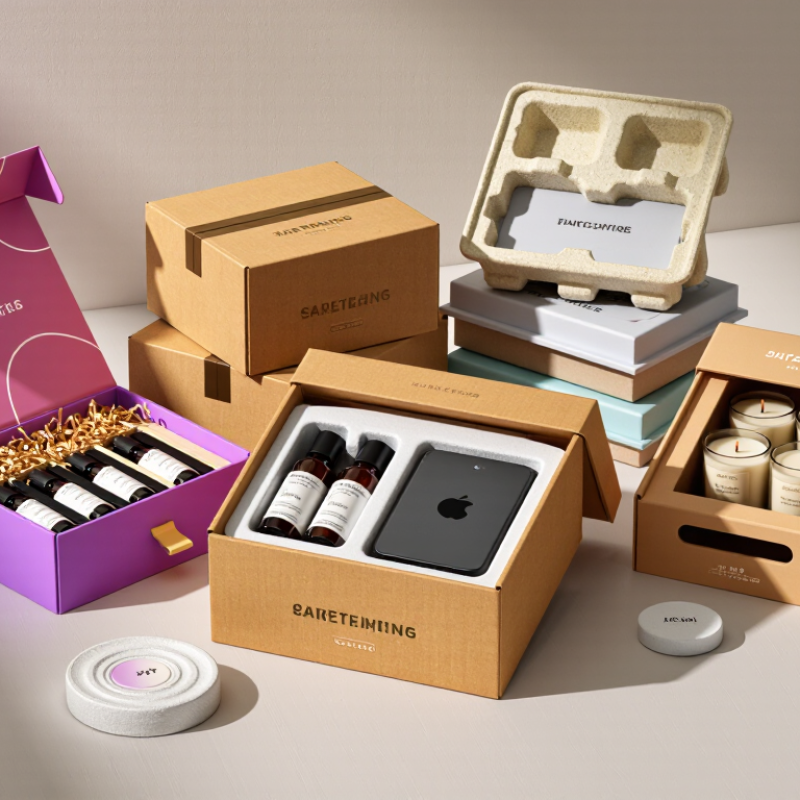
A marketing box is a shipping package designed to do more than contain a product. Its structure protects the item, while printed colors, copy, and inserts introduce the business at the doorstep. The box works across several moments: a clear exterior sets expectations, an easy-open flap reduces friction, and an interior message or QR code can guide the next step. Small details matter. A textured sleeve or neatly fitted tissue can feel deliberate; a loose insert can feel like clutter. The box still has to survive handling, so visual appeal cannot replace correct sizing, cushioning, and practical testing.
Marketing boxes also turn a brief delivery into a physical brand encounter. In its 2016 e-commerce packaging study, Dotcom Distribution reported that 40% of surveyed consumers were more likely to repeat-purchase from an online retailer using premium packaging. That matters. The survey shows an association, not proof that better packaging causes loyalty. Teams can track box-specific offers or QR scans, but attribution remains imperfect when customers discover products through several channels. A useful design starts with the product, shipping conditions, and one measurable customer action—not decoration alone. Test it physically. Even a clever message may be overlooked if opening the box feels awkward.
How Packaging Builds Brand Identity and Recognition
Marketing boxes do more than protect products during shipping. They give customers an early impression of your business, sometimes before they see the item inside. A consistent color palette, readable logo, and distinctive pattern can make a box easier to recognize on a crowded doorstep. Repeating these visual details across orders helps build familiarity over time. Keep the design clear. Too many fonts or decorative elements can make even a carefully designed box feel confusing.
Packaging also communicates practical details about your brand’s character. A sturdy box with a neat interior may suggest care, while a handwritten-style thank-you card can make an order feel personal. These choices should match the customer experience you can actually deliver. A polished package cannot compensate for a disappointing product, and that is easy to forget when focusing on appearance. Test boxes with real products; loose inserts and scuffed corners can undermine a strong design.
Tips: Choose two or three recognizable visual elements and use them consistently. Check how colors look under indoor lighting. Ask a few customers what they notice first. Their answers may differ from your expectations, which can be useful. Keep labels readable, and leave enough space for shipping information.
How Marketing Boxes Protect Products and Shape Customer Experience
Marketing boxes protect products and shape the customer’s first physical interaction with a business. A snug insert can stop ceramic pieces from knocking together, while a sturdy outer carton helps resist crushing during transit. Protection is part of customer experience. PwC’s 2018 Future of Customer Experience survey found that 32% of consumers would stop doing business with a company after one bad experience. The survey did not isolate packaging as the cause, but a damaged delivery can contribute to a poor impression.
The unboxing experience also depends on small details: clean folds, readable instructions, and a seal that opens without a struggle. Dotcom Distribution’s 2019 eCommerce Packaging Report found that 40% of consumers were more likely to recommend a product when it arrived in branded packaging. Treat this as survey evidence, not a promise of future sales. A box that arrives scuffed or needs a knife to open may undermine trust. Less can work.
Tips: Test a packed sample with a short drop test, then inspect its corners and seals. Match insert space to the product, and make opening steps clear. Avoid oversized cartons; excess filler adds cost and can frustrate customers. Track damage complaints monthly. One weak spot can keep repeating.
How Boxes Support Promotion and Customer Engagement
A marketing box turns delivery into a small, physical brand experience. Its color, printed message, and opening sequence can prompt customers to pause, notice details, and share an unboxing moment. Keep the message useful: a brief product-care tip or a QR code linking to clear instructions gives the customer a reason to engage. Too much print can feel like clutter.
There is evidence that packaging choices affect buying attitudes. Trivium Packaging’s 2023 Global Buying Green Report found that 82% of surveyed consumers said they would pay more for products with sustainable packaging. That does not guarantee a sale, but it makes material choices part of the promotional message. A sturdy, right-sized box with recyclable materials can show care while protecting the product. Less waste matters.
Still, a box cannot repair a poor product or late delivery. It can also disappoint if the promise looks grander than what arrives. Test the box with real shipments: check whether corners crush, labels peel, or opening feels awkward. Small details count. Review customer comments and repeat-purchase patterns, then adjust the design. Packaging is not a campaign by itself; it is a useful touchpoint that earns attention when the experience feels honest.
How to Choose Marketing Boxes for Business Needs
Choosing marketing boxes starts with the product, not the artwork. Measure its length, width, and height, including lids, inserts, or fragile parts. Measure twice. A snug fit can reduce movement, while a box that is too tight may damage corners or make packing slower. For shipped orders, test a packed sample through typical handling before committing to a large quantity.
Think about where customers will see and open the box. A retail display may need clear product visibility and a sturdy base; a subscription shipment may need easy opening and compact dimensions. Match the material to the product’s weight and delivery conditions. A simple corrugated box may be practical for transit, while a paperboard box can suit lighter items. Ask suppliers for material details, print samples, and minimum order quantities. Compare the full cost, including inserts, setup, and storage—not just the price per box.
Your design should make key information easy to notice without crowding the surface. Check that colors and text remain legible on a physical sample; screens can be misleading. Choose materials your team can source consistently, and confirm disposal instructions are accurate for your local collection system. There is no perfect option. A small pilot run may expose awkward folds or excess packaging, and that is useful feedback, even if it means revising the design.
Why Marketing Boxes Matter
Packaging can shape how consumers respond to a product. In a 2018 Ipsos survey, 72% of U.S. consumers said packaging design influences their purchase decisions.
Source: Ipsos, 2018. Survey finding; results may vary by audience and market.
Choosing the Right Marketing Box
Match the box to the product’s size and fragility, shipping conditions, budget, and brand presentation. Test a sample before ordering at scale, and consider recyclable materials where practical.