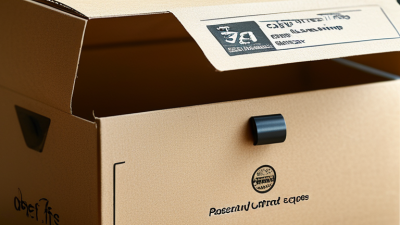
A curated selection of packaging products that fly off our shelves. Our customers love these bestsellers for their practicality and visual appeal, ensuring your products stand out and attract more buyers.
What are the top specialty boxes for global buyers? The answer depends on product value, shipping conditions, branding goals, and regional requirements. Specialty boxes are designed for more than appearance. They can protect delicate products, improve shelf presentation, and support a consistent customer experience.
Experienced buyers often compare rigid boxes, magnetic closure boxes, drawer boxes, telescoping boxes, and custom-printed corrugated packaging. A rigid box may suit premium electronics or watches. A drawer box can create a careful opening experience for cosmetics or gift sets. Corrugated specialty boxes offer practical protection for heavier goods and longer transport routes. Details matter. Strong corners, accurate inserts, clean folding, and reliable closures can prevent costly damage.
Global sourcing requires more than attractive samples. Buyers should review material quality, print consistency, factory experience, testing records, and communication standards. Packaging may need suitable food-contact materials, responsible fiber sources, or region-specific labeling. Requirements vary, and assumptions can cause delays. Independent testing is useful when products face humidity, compression, vibration, or temperature changes.
No box is perfect. A thicker structure may improve protection but increase shipping weight. A premium finish may look impressive but complicate recycling. Even experienced teams can overlook small issues, such as an insert shifting during transit. For this reason, responsible buyers should request prototypes, test real shipping conditions, and compare total costs. The best specialty boxes balance protection, presentation, sustainability, and dependable production. Their value is measured after delivery, not only on a showroom table.
Specialty boxes are packaging designed for a product’s specific shape, weight, sensitivity, or presentation. They may include rigid boxes, folding cartons, corrugated mailers, and boxes with custom inserts. Unlike standard cartons, they use tailored dimensions and materials. A well-designed box can hold fragile equipment firmly, protect glass containers, or keep premium items aligned during transport.
Global buyers need specialty boxes because international shipping creates extra risks. Parcels may face vibration, stacking pressure, humidity, temperature changes, and repeated handling. A fitted insert can stop movement inside the box. A moisture-resistant coating may help during long sea routes. Clear labeling areas also support smoother warehouse handling and customs review. Packaging should match the destination market’s material, recycling, and labeling requirements. These rules differ widely, so buyers should verify current requirements before production.
Cost matters too. Oversized packaging increases dimensional shipping charges and wastes storage space. Lightweight materials can reduce freight costs, but weak construction may cause damage claims. That trade-off deserves testing. A practical evaluation should include compression tests, drop tests, sample shipments, and checks after humid storage. A perfect box does not exist.
Buyer expectations also influence the design. Easy opening, clean printing, and reusable components can improve the receiving experience. However, decorative features may complicate recycling or raise unit costs. The best specialty box balances protection, appearance, compliance, and total logistics expense. Small design changes often matter. A few millimeters can affect fit, safety, and shipping efficiency.
Specialty boxes work best when their structure matches the product’s real handling risks. Rigid magnetic boxes suit premium cosmetics, jewelry, and small gift items. Their firm panels protect delicate contents and create a controlled opening experience. Foam or molded inserts can prevent movement during transport. However, rigid packaging adds weight and shipping cost. That trade-off is easy to underestimate.
Corrugated mailer boxes serve online retail, subscription goods, and household products. They are lightweight, stackable, and easier to recycle in many markets. Die-cut inserts can separate electronics, accessories, or fragile components without excessive plastic. Small parts need snug compartments. Otherwise, they may collide inside the box. I have seen attractive packaging fail because the internal space was too generous.
Food and temperature-sensitive healthcare products may require insulated boxes with liners and cooling materials. These designs need reliable sealing and clear handling instructions. Industrial suppliers often choose heavy-duty corrugated cartons or reinforced wooden cases for tools and machine parts. Moisture barriers matter during long sea shipments. Some packaging is overbuilt, though. A practical test should consider drop height, vibration, humidity, and warehouse stacking. Regional recycling rules, product weight, and unpacking habits also influence the right box type. The best choice is rarely the most impressive one.
Specialty boxes are selected according to product shape, protection needs, handling conditions, and industry requirements. The chart shows common product and industry applications for each box type. A value of 1 means the application is commonly served by that box format; it is not a market-share measurement.
For global buyers, specialty boxes perform best when material and design choices match real handling conditions. Rigid paperboard offers a firm presentation and resists light compression. Corrugated structures provide better cushioning during repeated loading and unloading. Recycled fibers can support sustainability goals, but their strength may vary with humidity. A box that feels premium in a showroom may soften after weeks in a damp warehouse. That difference matters.
Design controls more than appearance. A well-fitted insert limits movement, reducing scuffs and corner damage. Folded partitions can separate fragile components without adding excessive weight. Magnetic or lift-off closures improve access, yet they may increase assembly time and shipping volume. Clear dimensions, compression targets, and drop-test records make supplier comparisons more reliable. In practice, small tolerances can become expensive. A lid misaligned by two millimeters may frustrate users and weaken repeat orders. However, not every specialty box needs maximum rigidity. Overbuilt packaging consumes materials and may raise freight costs without improving protection. Testing should challenge assumptions.
Tips: Request samples made with the intended board grade, coating, and insert. Test them after temperature and humidity exposure, not only when new. Check opening effort, stacking stability, print scuffing, and disposal instructions. Keep a written specification for dimensions and acceptable defects. Leave room for revision; early designs are rarely perfect.
Global buyers often choose specialty boxes for fragile, premium, or highly customized products. Common options include rigid presentation boxes, corrugated shipping boxes, telescoping boxes, and compartment boxes. The right format depends on product weight, destination, handling risks, and shelf presentation. A beautiful box can still fail at the loading dock.
Before ordering, request measurable specifications, not only product photos. Check board grade, paper weight, compression strength, wall thickness, and dimensional tolerance. ASTM D4169 and ISTA 3A provide recognized methods for testing drops, vibration, and distribution stress. The International Safe Transit Association reports that laboratory testing can expose packaging weaknesses before commercial shipments. Ask for a test report tied to your exact box size and contents.
Material claims also require evidence. ISO 18601 supports a lifecycle-based approach to packaging design, while FSC Chain of Custody documentation verifies certified fiber movement through the supply chain. For food-contact applications, request destination-market declarations and migration testing. The European Environment Agency reported that packaging waste remains a major share of municipal waste in Europe, making recyclability increasingly important. Yet “recyclable” is not universal. Local collection systems differ. A supplier should state recycled content, coating type, ink system, and disposal route clearly.
Inspect samples under real conditions: filled weight, humid storage, stacked pallets, and repeated opening. Measure the inside cavity, because inserts often reduce usable space. We once overlooked a two-millimeter tolerance issue; the product fit, but the lid warped during transit. That mistake was avoidable. Require a signed specification sheet, production sample, and pre-shipment inspection before approving volume orders.
What Are the Top Specialty Boxes for Global Buyers?
How Can Buyers Compare Suppliers, Costs, and Customization Options?
Global buyers should compare specialty box suppliers through more than catalog photos. A rigid gift box, magnetic box, or protective shipping box may look similar online. Their board strength, corner finish, and inner fit can differ greatly. Request a physical sample before approving a large order. Check the box after opening, stacking, and light moisture exposure. Small tests often reveal weak edges or loose inserts.
Cost comparison should include the full landed price, not only the factory quote. Ask for material grades, minimum order quantities, tooling fees, sample charges, packing methods, and delivery terms. Confirm production lead time in writing. A low unit price can become expensive after rework, customs clearance, or damaged cartons. I once overlooked inner packaging during a supplier comparison. That mistake made the cheaper offer less attractive.
Customization requires precise specifications. Share dimensions, folding direction, print colors, insert materials, surface finishes, and tolerance limits. Reliable suppliers explain what they can repeat consistently. They should also provide production photos, inspection records, and clear quality procedures. Ask how they handle color variation and rejected pieces. Independent inspections can add confidence for international orders. Still, no supplier is perfect. Buyers should record open questions, compare evidence, and leave time for corrections before shipment.
| Specialty Box Type | Typical Applications | Common Materials | Indicative Unit Cost at 1,000 Units |
Typical MOQ | Typical Production Lead Time | Customization Options | Protection Level | Sustainability Considerations | Supplier Comparison Priorities |
|---|---|---|---|---|---|---|---|---|---|
| Rigid Setup Box | Luxury gifts, cosmetics, jewelry, electronics, and premium retail packaging | Paper-wrapped rigid board, recycled greyboard, specialty paper, fabric, or faux leather | US$0.80–3.50 | 500–1,000 units | 25–45 days | Magnetic closure, ribbon pull, foil stamping, embossing, debossing, inserts, windows, and custom structures | High for presentation; medium for impact protection | Recyclable when made with paper-based coverings and limited mixed materials; magnets and fabric may complicate recycling | Board thickness, corner finishing, wrap accuracy, color consistency, insert fit, and sample approval process |
| Folding Carton | Food, pharmaceuticals, personal care, household goods, and mass-market retail products | Folding boxboard, solid bleached board, recycled paperboard, or coated paperboard | US$0.08–0.45 | 1,000–5,000 units | 15–30 days | Die-cutting, tuck flaps, crash-lock bases, spot coating, matte or gloss varnish, foil, embossing, and perforations | Medium | Usually widely recyclable if coatings, laminates, and adhesives are compatible with local recycling systems | Paper grammage, crease quality, print registration, coating performance, food-contact compliance, and dieline accuracy |
| Corrugated Mailer Box | E-commerce shipments, subscription products, apparel, books, and moderately fragile goods | Single-wall or double-wall corrugated fiberboard with kraft or white liners | US$0.25–1.20 | 500–2,000 units | 15–30 days | One-color or full-color printing, tear strips, self-locking tabs, handles, dividers, and custom inserts | High for shipping; dependent on flute and board grade | Highly recyclable in many markets; water-based inks and paper tapes improve recyclability | Edge crush test, burst strength, flute type, compression performance, moisture resistance, and shipping-test results |
| Magnetic Closure Box | Premium apparel, fragrances, gift sets, consumer electronics, and high-value promotional products | Rigid paperboard, wrapped specialty paper, embedded magnets, and paper or foam inserts | US$1.20–4.50 | 500–1,000 units | 30–50 days | Hidden or exposed magnets, hinged lid, ribbon, foil, embossing, custom inserts, and multi-compartment layouts | High for presentation; medium for transit unless externally protected | Paper components may be recyclable, but magnets, foams, laminates, and mixed-material inserts require separation | Magnet strength, hinge durability, lid alignment, odor control, finish quality, and packaging for international transit |
| Window Box | Bakery items, toys, cosmetics, food gifts, candles, and products requiring visibility | Paperboard or corrugated board with cellulose film, PET film, or other transparent window material | US$0.18–0.90 | 1,000–3,000 units | 18–35 days | Window shape, die-cut pattern, hanging tab, locking base, printing, coating, and internal supports | Medium | Paperboard is generally recyclable; transparent plastic windows may need removal unless accepted by local facilities | Window adhesion, clarity, food-contact suitability, crease strength, dust protection, and automated packing compatibility |
| Tube Box | Tea, coffee, cosmetics, candles, posters, spirits, and cylindrical or elongated products | Spiral-wound paperboard, kraft paper, printed paper wrap, metal or paper end caps | US$0.35–1.80 | 1,000–3,000 units | 20–40 days | Slip lids, shoulder-neck construction, embossed wraps, foil, internal trays, pull ribbons, and custom end caps | Medium to high, depending on wall thickness and closure design | Paper-based tubes can be recyclable; metal lids, plastic liners, and laminated wraps may require material separation | Wall thickness, moisture barrier, lid fit, seam quality, odor migration, dimensional tolerance, and stacking strength |
| Foam-Insert Presentation Box | Precision tools, electronics, watches, instruments, promotional kits, and fragile components | Rigid or corrugated box with EVA, polyethylene, polyurethane foam, molded pulp, or felt inserts | US$1.00–5.00 | 500–1,000 units | 30–50 days | Custom cavities, finger pulls, layered inserts, antistatic treatment, branding, hinges, and closures | Very high when engineered and tested correctly | Foam is less readily recyclable than paper or molded pulp; molded-pulp inserts are a lower-impact alternative for many products | Drop-test results, cavity tolerance, material density, antistatic properties, compression recovery, and product retention |
| Molded Pulp Box | Electronics, cosmetics, food packaging, protective inserts, and environmentally focused retail packaging | Recycled paper fiber, bamboo fiber, agricultural fiber, or molded cellulose pulp | US$0.30–1.80 | 1,000–5,000 units | 25–45 days | Custom cavity geometry, embossing, colored pulp, lids, stackable forms, and integrated product supports | High for product fit; medium to high for impact protection | Usually recyclable or compostable depending on coatings, additives, and local infrastructure; fiber sourcing should be verified | Fiber composition, moisture resistance, dimensional accuracy, surface smoothness, mold tooling cost, and compression performance |
| Wooden Presentation or Shipping Crate | Wine, machinery, artwork, instruments, premium gifts, and heavy or high-value products | Plywood, solid wood, MDF, OSB, wood battens, metal fasteners, and protective liners | US$4.00–25.00+ | 50–500 units | 30–60 days | Custom dimensions, foam or felt lining, hinges, locks, handles, laser marking, dividers, and reinforced corners | Very high | Wood packaging may require heat treatment and regulated marking for international shipping; weight and material volume increase transport emissions | Wood-treatment compliance, moisture content, load capacity, fastener quality, crate weight, fumigation documentation, and export suitability |
| Reusable Fabric or Nonwoven Box | Storage sets, apparel, promotional kits, hampers, and lightweight gift collections | Cotton, recycled polyester, linen blends, felt, nonwoven polypropylene, cardboard panels, and closures | US$0.70–4.00 | 500–2,000 units | 25–45 days | Handles, zippers, drawstrings, labels, embroidery, screen printing, dividers, and collapsible structures | Low to medium for impact protection | Reuse can reduce packaging waste; recycled fibers may improve material efficiency, while blended textiles can complicate end-of-life recycling | Fabric weight, stitching density, odor, colorfastness, dimensional stability, wash performance, and labor quality |
Cost ranges are indicative factory-direct estimates in US dollars for standard sizes and moderate customization at approximately 1,000 units. Actual pricing varies with dimensions, materials, printing coverage, tooling, inserts, certifications, freight, duties, taxes, and order volume. Buyers should compare approved samples, technical specifications, quality-control procedures, payment terms, and delivered-cost quotations before selecting a supplier.