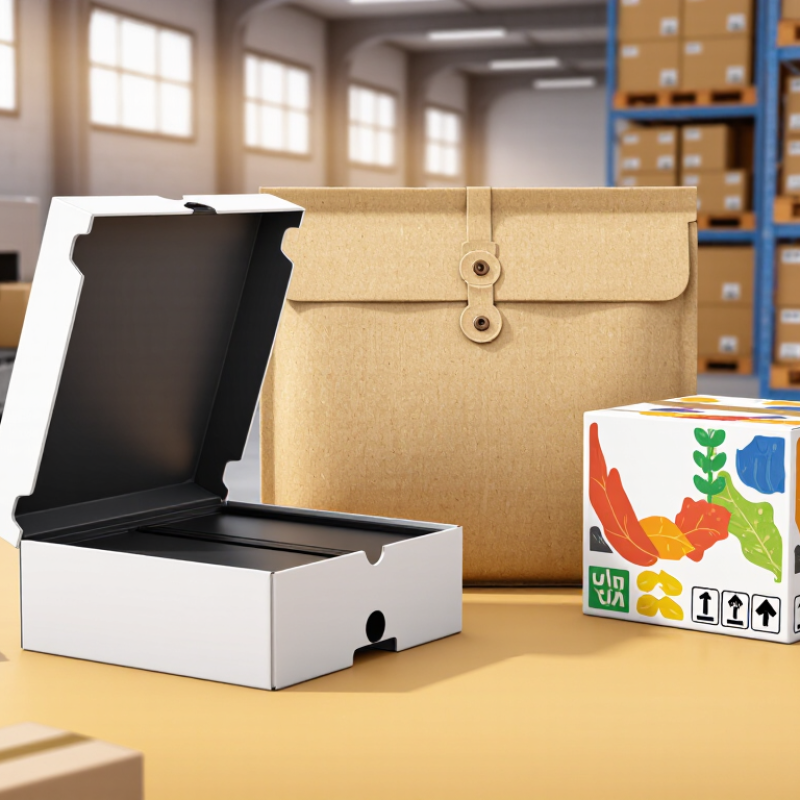
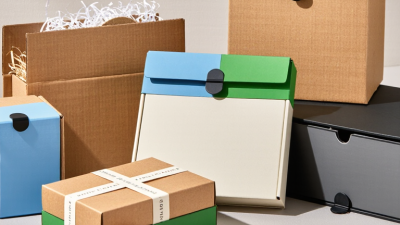
A curated selection of packaging products that fly off our shelves. Our customers love these bestsellers for their practicality and visual appeal, ensuring your products stand out and attract more buyers.
Choosing the right marketing boxes has become a practical challenge for global buyers in 2026. Packaging must protect products, communicate value, and survive long-distance handling. A box may travel through humid ports, crowded warehouses, and several delivery networks before reaching the customer.
Apple co-founder Steve Jobs, a respected product presentation leader, once said, “Packaging can be theater, it can create a story.” That idea remains useful for modern marketing boxes. A rigid magnetic box can create a premium unboxing moment. A recyclable kraft mailer can support a natural brand image. A printed corrugated box can combine protection with visible brand recognition.
This guide examines the best box types for different international buying goals. It considers material strength, printing quality, customization, shipping efficiency, and end-of-life disposal. Buyers should also review supplier experience, production samples, testing records, and communication standards. A beautiful box is not enough. It may collapse under stacking pressure or add unnecessary freight costs.
Details matter.
Global sourcing also requires responsible decisions. Packaging should follow applicable recycling, labeling, safety, and import requirements in target markets. Rules differ by country and product category. Professional suppliers can provide material specifications, quality controls, and realistic lead times. Still, no recommendation fits every brand. Some businesses may overinvest in luxury finishes when a simpler structure performs better. Others may choose low-cost materials and regret the damage rate later. This article offers a balanced starting point, not a perfect formula.
Marketing boxes are purpose-built packages that present products, samples, and sales information in one organized format. They may include brochures, specification sheets, product cards, QR codes, and small demonstration items. Unlike ordinary shipping cartons, these boxes support communication as well as delivery. Their structure, printing, and opening experience help buyers understand an offer quickly.
Global buyers need marketing boxes because international purchasing involves distance, uncertainty, and different business habits. A carefully designed box can protect samples during long transport and make product details easier to review. It can also provide multilingual instructions, material information, contact details, and clear usage guidance. These details reduce repeated questions between suppliers and distributors. They also show that the seller understands professional purchasing standards.
A reliable marketing box should balance appearance with practical performance. Strong inserts can prevent movement, while compact dimensions may reduce shipping costs. Labels should remain readable under different lighting conditions. Digital links should work across regions and devices. One overlooked issue is local interpretation. Colors, images, and phrases may carry different meanings in different markets. A polished box can still create confusion. Testing with several target buyers is wiser than trusting internal opinions alone. Marketing boxes are useful tools, but they cannot replace accurate products, honest claims, or responsive service.
2026 Best Types of Marketing Boxes for Global Buyers
The best marketing box depends on the product, not only the campaign. Rigid setup boxes suit premium electronics, cosmetics, and delicate gifts. Their thick walls create protection and a slower opening experience. Folding cartons work better for books, snacks, accessories, and lightweight retail items. They reduce storage space and shipping weight. For subscription products, mailer boxes offer practical branding and fast fulfillment. According to Pitney Bowes’ 2023 Parcel Shipping Index, global parcel volume reached 161.8 billion shipments in 2022. A compact box can therefore reduce repeated transport waste.
Product behavior matters more than appearance. Glass items need molded inserts, corner protection, and controlled movement. Apparel often needs a slim mailer with a clean inner print. Food-related products require suitable barriers against moisture, odor, and temperature changes. The PMMI 2024 Global Packaging Trends report identifies right-sizing, automation, and sustainability as major packaging priorities. That makes oversized boxes harder to justify. They may look generous, but they increase void fill and freight volume.
Sustainability claims need evidence. McKinsey research found that 60% to 70% of surveyed consumers were willing to pay more for sustainable packaging. Yet recyclable materials alone do not guarantee better results. Local recycling systems differ widely. I would test three box sizes with real products before choosing a final structure. Drop tests, moisture checks, and packing-time trials reveal uncomfortable mistakes. A beautiful box can still fail at the warehouse door. That weakness deserves attention. Sources: Pitney Bowes Parcel Shipping Index 2023; PMMI Global Packaging Trends 2024; McKinsey Sustainability in Packaging research.
Which types of marketing boxes best fit different products?
For global buyers, a marketing box must protect the product and communicate value quickly. Material choice controls strength, weight, moisture resistance, and print quality. Corrugated fiberboard suits shipping because its fluted layers absorb impact. Folding carton offers sharper graphics but needs extra protection during long-distance transport. Recycled paper can support sustainability goals, although its surface may show fibers or color variation.
Structural design affects performance just as much. A reinforced corner reduces crushing when cartons are stacked. Locking tabs can replace plastic tape and simplify opening. Inserts prevent movement, especially when products have uneven shapes. From packaging evaluations, I have found that oversized boxes often create damage because products shift inside. That assumption is not always right. Sometimes, a tighter fit causes pressure marks or makes inspection difficult. Humidity also changes results, particularly during sea freight. Testing should include compression, vibration, drop, and temperature exposure before approval.
Tips: Match the box design to the product’s actual weight and travel route. Leave controlled space for cushioning, not empty volume. Request material samples before judging color or stiffness. Measure internal dimensions carefully. Small errors matter. Ask suppliers for documented test data and clear material specifications. A box may look premium on a sample table, yet perform poorly after weeks in stacked storage. Feedback from warehouses and delivery teams can reveal weaknesses that laboratory tests miss.
Global buyers judge marketing boxes before they read the product message. Printing quality creates that first commercial signal. A clean logo, balanced spacing, and sharp product photography suggest operational care. Small details matter.
Offset printing suits larger runs with consistent colors and fine typography. Digital printing supports shorter runs and regional campaigns. Both methods need a physical proof before production. Screen tests can reveal weak contrast, muddy shadows, or text that disappears on dark board. A 300gsm recycled paperboard box with a soft-touch coating feels substantial in the hand. However, the coating may show fingerprints under strong retail lighting. That trade-off deserves honest review.
Branding becomes stronger when finishes support the box structure. Embossed lettering adds touchable depth, while debossing creates a quieter premium effect. Metallic foil can highlight a symbol, but excessive use may distract from the main message. Spot varnish works well on a matte surface, especially around product images or navigation icons. Interior printing can turn the opened box into a second communication space. It might show usage guidance, a short origin note, or carefully translated handling information. QR codes should remain high contrast and large enough for quick scanning. Test them across several phones and lighting conditions. A beautiful code that fails is still a failed feature. Suppliers should also confirm ink adhesion, color tolerance, material strength, and moisture performance through documented samples. Consistency matters more than decoration.
For global buyers, the best marketing box depends on product risk, shipping distance, and customer expectations. Corrugated boxes suit subscription goods and retail shipments because they are light, printable, and widely recyclable. Folding cartons work well for cosmetics, food accessories, and small electronics. Rigid boxes offer a premium feel, but they usually require more material and higher freight costs. Molded-fiber packaging can support sustainability goals, although moisture resistance needs careful testing.
Supplier comparison should start with landed cost, not the factory quotation. Request tooling fees, minimum order quantities, packing density, delivery terms, and replacement policies. A lower unit price may hide expensive ocean freight or high product damage. Ask for box compression results, drop-test records, and material specifications. Independent testing adds credibility. It also exposes weak assumptions.
Sustainability claims need evidence. The OECD’s Global Plastics Outlook reports that only 9% of plastic waste was recycled in 2019. The World Bank’s What a Waste 2.0 estimates 2.01 billion tonnes of municipal waste are generated annually. These figures make material reduction practical, not decorative. Compare recycled content, fiber sourcing, ink chemistry, and production waste. Request supplier-specific carbon data, preferably aligned with ISO 14067 methods. Be cautious with vague “eco-friendly” language. I have found that recyclable packaging can still perform poorly when coatings complicate sorting. The ideal box is not always the greenest-looking one.
Planning benchmark for a small-to-medium package approximately 300 × 200 × 100 mm, produced in a run of 1,000 units. Costs are indicative USD ranges for standard structures and basic one- or two-color printing; final quotations vary by region, material grade, tooling, freight, artwork, order volume, and certification requirements.
| Box Type | Typical Material | Best Marketing Use | Indicative Unit Cost (USD) | Typical MOQ | Typical Production Lead Time | Typical Recycled Content | End-of-Life Profile | Protection Level | Key Supplier Questions |
|---|---|---|---|---|---|---|---|---|---|
| Corrugated Mailer Box | Single-wall kraft corrugated board, commonly E-flute or B-flute | Subscription products, e-commerce shipments, product launches, and unboxing campaigns | $0.65–$2.20 | 500–1,000 units | 15–30 business days after artwork approval | Often 30%–100%, depending on liner and flute specifications | Widely recyclableRemove tape and labels where required | Medium to high | Ask for flute type, edge-crush test, burst strength, recycled-fiber percentage, print process, and export-packaging performance. |
| Folding Carton | Folding boxboard or solid bleached / unbleached paperboard | Retail presentation, cosmetics, food accessories, electronics accessories, and promotional kits | $0.25–$1.20 | 1,000–3,000 units | 15–35 business days | Commonly 30%–100%; verify the paperboard grade and chain-of-custody documentation | Generally recyclableAvoid non-paper lamination | Low to medium | Confirm board thickness, caliper, paper certification, coating type, food-contact suitability if relevant, and crease quality. |
| Rigid Setup Box | Paper-wrapped greyboard or chipboard structure | Premium gifting, luxury campaigns, welcome kits, and high-value product presentation | $2.00–$8.00 | 300–1,000 units | 25–50 business days | Usually 30%–100% in the board core; outer wrap may vary | Potentially recyclableSeparate magnets, foam, ribbon, and mixed materials | High for presentation; medium for shipping unless externally protected | Ask whether magnets, foam, plastic trays, foil, and textile components can be removed before recycling. |
| Molded Fiber Pulp Box | Recycled paper pulp, molded cellulose fiber, or agricultural-fiber blend | Protective inserts, electronics accessories, beauty sets, and sustainability-led campaigns | $0.80–$3.50 | 1,000–5,000 units | 30–60 business days, including tooling when needed | Often 50%–100%, depending on the fiber blend | Usually recyclable or compostable by specificationConfirm local acceptance | Medium to high for cushioning; limited for premium print detail | Request fiber composition, moisture resistance, mold-tool ownership, compression testing, and disposal instructions. |
| Kraft Paper Tube | Spiral-wound kraft paperboard with paper or metal end caps | Tea, coffee, candles, cosmetics, posters, and cylindrical promotional products | $0.90–$3.80 | 500–2,000 units | 25–45 business days | Commonly 50%–100% in the paperboard body | Recyclable when predominantly paperCheck cap and barrier materials | Medium | Confirm internal barrier, moisture and grease resistance, cap material, wall thickness, and whether the tube is designed for food contact. |
| Magnetic Closure Gift Box | Wrapped rigid board with paper, fabric, magnets, or metal components | Corporate gifts, premium launches, jewelry, beauty, and seasonal campaigns | $2.50–$10.00 | 300–1,000 units | 30–55 business days | Usually 30%–100% in the board core; decorative components may contain little or none | Mixed-material challengeDesign for component separation | High for presentation; medium for transport | Ask for magnet quantity, recycled board content, removable inserts, packaging weight, and a component-separation guide. |
| Kraft Folding Mailer | Uncoated or lightly coated kraft paperboard, often with self-locking tabs | Direct-to-consumer orders, samples, apparel accessories, and lightweight promotional items | $0.45–$1.60 | 500–2,000 units | 15–30 business days | Commonly 50%–100% | Widely recyclableLow material complexity | Medium | Compare board weight, locking strength, print coverage, water resistance, and flat-packed shipping efficiency. |
| Two-Piece Paperboard Box | Rigid or semi-rigid paperboard with separate lid and base | Product bundles, event kits, retail displays, and reusable presentation packaging | $0.80–$3.80 | 500–1,500 units | 20–40 business days | Often 30%–100%, depending on board and surface finish | Generally recyclableAvoid plastic windows and foil where possible | Medium | Compare lid fit, board caliper, nesting efficiency, surface coating, print durability, and dimensional tolerances. |
| Evaluation Dimension | Evidence to Request from Suppliers | Why It Matters for Global Buyers |
|---|---|---|
| Material specification | Board grade, thickness, grammage, flute profile, fiber composition, coatings, adhesives, and component list | Prevents suppliers from quoting different material structures under the same box name. |
| Cost transparency | Separate line items for tooling, printing plates, sampling, packaging, inland freight, export cartons, and shipping terms | Enables a meaningful landed-cost comparison instead of comparing factory prices only. |
| Order-volume pricing | Quotes for at least 500, 1,000, 3,000, and 10,000 units using the same specifications | Shows how setup costs and economies of scale affect the real unit price. |
| Quality control | Pre-production sample, approved golden sample, dimensional tolerance, color standard, compression test, and inspection procedure | Reduces variation across repeat orders and production locations. |
| Sustainability claims | Recycled-content declaration, fiber source, chain-of-custody certificate where applicable, coating details, and product-level test reports | Helps distinguish documented attributes from unsupported environmental marketing claims. |
| End-of-life design | Instructions for separating magnets, foam, plastic windows, ribbons, laminates, and adhesive labels | Packaging that is technically recyclable may be difficult to recycle if it contains inseparable mixed materials. |
| Logistics efficiency | Flat-packed dimensions, cartons per pallet, gross weight, pallet footprint, container utilization, and moisture protection | Packaging volume can significantly change freight cost and transport-related emissions. |
| Compliance readiness | Food-contact documentation when relevant, packaging composition data, labeling support, and destination-market requirements | Requirements differ by destination market and product category; documentation should be confirmed before mass production. |