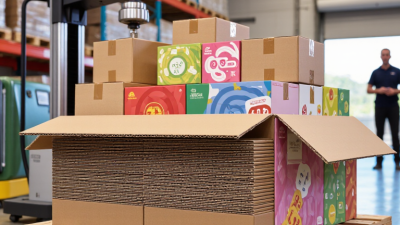
A curated selection of packaging products that fly off our shelves. Our customers love these bestsellers for their practicality and visual appeal, ensuring your products stand out and attract more buyers.
Choosing reliable corrugated shipping boxes suppliers requires more than comparing prices on a spreadsheet. Box strength, material quality, production consistency, and delivery performance all affect the customer experience. A damaged carton can expose products, delay fulfillment, and increase return costs. Small details matter. Flute profiles, edge crush strength, burst resistance, and moisture protection should match the shipment’s weight and route.
This guide examines leading suppliers worldwide through practical purchasing criteria. It considers manufacturing capacity, recycled content, customization, printing quality, minimum order quantities, lead times, and quality-control procedures. Reliable suppliers should provide clear specifications, sample testing, traceable materials, and responsive technical support. Certifications can strengthen confidence, but they should be verified rather than accepted at face value. Regional production locations also influence freight costs and delivery stability.
No supplier is perfect. Market conditions change. Capacity, pricing, and delivery schedules may shift without much warning. Buyers should request current quotations, production samples, and written service commitments before placing large orders. A supplier that performs well for retail cartons may not suit heavy industrial shipments. Another may offer excellent printing but limited export support. These differences deserve careful attention.
The companies discussed here represent useful starting points, not automatic recommendations. Real performance depends on product design, order volume, destination, and communication. By comparing measurable evidence with hands-on requirements, businesses can select corrugated shipping boxes that protect goods and support dependable global operations.
Global corrugated shipping box suppliers operate in a market shaped by e-commerce, freight costs, and stricter packaging expectations. A 2024 Smithers market analysis estimated global corrugated packaging demand at more than US$200 billion annually. The report also identified steady growth in online retail and food delivery. These channels require clean, stackable boxes that tolerate handling, moisture, and warehouse pressure.
Regional data shows a more uneven picture. FEFCO statistics for Europe recorded roughly 43 billion square metres of corrugated board production in 2023, with demand affected by slower industrial activity. Supplier capabilities therefore vary by location. Strong manufacturers usually provide short-run sampling, certified paper sourcing, compression testing, and dependable lead times.
A practical test is simple: place a filled box beneath similar cartons and inspect corner crushing after storage.
Material decisions matter. The Fibre Box Association has reported that corrugated packaging remains one of the largest paper-based packaging segments in North America, supported by high recovery rates. Recycled fibre can reduce virgin material use, but it may weaken performance in humid conditions. That trade-off is often underestimated. Box suppliers should disclose flute profiles, edge-crush results, moisture limits, and recycled content instead of offering vague sustainability claims. Data can guide purchasing, but local transit routes and warehouse conditions still require real-world trials.
Corrugated shipping boxes vary by flute profile, board grade, and construction. Single-wall cartons suit light parcels and routine warehouse handling. Double-wall designs add cushioning for heavier loads or longer transport routes. Triple-wall boxes serve demanding industrial shipments, but they increase weight and storage volume. Choosing more material is not always better.
The liner and medium usually combine recycled fiber with stronger virgin fiber. Moisture-resistant coatings can protect cartons in humid warehouses, though they may complicate recycling. Smithers’ industry report, The Future of Corrugated Packaging to 2028, projects continued global market growth, driven by e-commerce and changing retail logistics. That growth makes material efficiency increasingly important. Suppliers should provide measurable specifications, not vague strength claims.
Performance testing should reflect the actual journey. Edge Crush Test values indicate stacking potential, while Box Compression Test results show how cartons behave under warehouse loads. ASTM D4169 and ISTA 3A provide recognized distribution-testing frameworks for vibration, drops, compression, and temperature exposure. ISO 12048 also supports compression testing for filled transport packages. A carton passing one test can still fail in real transit. I have seen excellent board collapse after poor pallet alignment. Testing the packaged product remains essential.
| Box Type | Typical Applications | Corrugated Structure | Common Materials | Typical Performance Profile | Relevant Test Standards | Key Purchasing Considerations |
|---|---|---|---|---|---|---|
| Regular Slotted Container (RSC) | General e-commerce shipments, warehouse distribution, retail cartons, and palletized transport. | Single-wall Double-wall Flaps meet at the center and are normally sealed with tape, adhesive, or staples. | Kraftliner or testliner outer facings with semichemical or recycled fluting. Standard flute options include B, C, E, and combinations such as BC. | Balanced compression strength, stacking stability, and material efficiency. Double-wall construction provides higher puncture and stacking resistance. |
Edge crush: TAPPI T 811 Box compression: ASTM D642 or ISO 12048 Bending resistance: ISO 3037 |
Confirm carton dimensions, board grade, flute direction, closure method, and required stacking load. |
| Half-Slotted Container (HSC) | Products loaded from the top, bulk components, long goods, and items requiring fast manual packing. | Single set of body flaps with an open top. Often combined with a separate lid or cap. | Recycled linerboard for standard-duty use; kraftliner for improved strength and moisture tolerance. | Good side-wall protection and fast filling, but lower top-load protection unless a lid or pad is added. |
Compression: ASTM D642 Edge crush: TAPPI T 811 Cobb water absorption: ISO 535 |
Specify lid fit, open-top dimensions, product restraint, and whether dust or moisture protection is required. |
| Full Overlap Box (FOL) | Heavy products, dense parts, industrial components, and shipments exposed to rough handling. | All flaps fully overlap across the box width, creating a reinforced base and top. | Double-wall board is common; kraft outer liners and stronger fluting are used for demanding loads. | High panel, edge, and bottom strength with improved resistance to forklift and conveyor handling. |
Box compression: ISO 12048 Edge crush: TAPPI T 811 Puncture resistance: ISO 3036 |
Evaluate total package weight, bottom clearance, pallet pattern, and whether straps or corner protection are needed. |
| Five-Panel Folder | Long or flat products such as furniture parts, panels, doors, frames, and specialty industrial items. | A single scored blank wraps around the product and includes a fifth protective panel. | Single-wall B or C flute for moderate loads; double-wall BC flute for longer or heavier products. | Broad surface coverage and improved protection for long edges and corners; performance depends strongly on fit. |
Edge crush: TAPPI T 811 Puncture: ISO 3036 Compression: ASTM D642 |
Control score-line accuracy, panel overlap, product fit, and protection at exposed corners. |
| Die-Cut Mailer | Subscription boxes, cosmetics, accessories, small electronics, books, and direct-to-consumer packaging. | One-piece self-locking design with integral lid, dust flaps, and tear strips. Usually made with fine flute profiles. | E-flute or B-flute board with kraft or white-top liner for print quality and moderate cushioning. | Efficient assembly and strong presentation value; generally suited to light or medium products. |
Edge crush: TAPPI T 811 Compression: ISO 12048 Cobb water absorption: ISO 535 |
Check die-cut tolerance, locking performance, print coverage, and clearance for inserts or cushioning. |
| Five-Panel Wraparound | Flat-packed furniture, appliances, long products, and items requiring continuous side and end coverage. | Wraparound blank forms the top, bottom, and side panels around the product. Ends may be sealed with glue, tape, or clips. | C-flute or double-wall BC flute for general shipping; kraftliner is preferred for higher compression demands. | Strong continuous protection and efficient packing for long products, with fewer seams than multi-piece packs. |
Box compression: ASTM D642 Edge crush: TAPPI T 811 Vibration: ASTM D4728 |
Define product orientation, seam location, end closure, pallet overhang, and automated packing requirements. |
| Double-Wall Heavy-Duty Box | Appliances, machinery parts, automotive components, export shipments, and high-weight consolidated loads. | Two corrugated mediums and three liners, commonly using BC, EB, or equivalent double-wall combinations. | Kraftliner or high-performance recycled liners with reinforced fluting. Moisture-resistant treatments may be added where appropriate. | High stacking strength, puncture resistance, and durability during long-distance transport and warehouse storage. |
Edge crush: TAPPI T 811 Compression: ISO 12048 Puncture: ISO 3036 Drop testing: ASTM D5276 |
Specify gross weight, stacking duration, humidity exposure, pallet configuration, and required safety margin. |
| Triple-Wall Container | Very heavy or fragile industrial equipment, export crating, bulk components, and high-load pallet shipments. | Three corrugated mediums and four liners, often combining coarse and fine flutes for strength and cushioning. | High-strength kraftliner, reinforced recycled liner, and heavy-duty fluting. Board construction is selected according to load and environment. | Very high compression and puncture resistance with increased weight, thickness, and material consumption. |
Compression: ISO 12048 Edge crush: TAPPI T 811 Puncture: ISO 3036 Incline impact: ASTM D880 |
Consider forklift entry, internal blocking, moisture exposure, handling equipment, and total package mass. |
| Shelf-Ready Packaging (SRP) | Retail replenishment, supermarket displays, warehouse clubs, and cartons designed for rapid shelf placement. | Tear-away or perforated outer packaging that converts from a shipping carton into a retail tray or display. | E-flute, B-flute, or lightweight single-wall board with printable white-top or kraft liners. | Designed for clean opening, shelf stability, visual presentation, and efficient replenishment rather than maximum load strength. |
Compression: ASTM D642 Edge crush: TAPPI T 811 Print rub resistance: ASTM D5264 |
Validate perforation tear force, display geometry, shelf footprint, barcode readability, and merchandising life. |
| Moisture-Resistant Corrugated Box | Chilled foods, agricultural products, humid warehouses, marine transport, and temperature-controlled distribution. | Standard box formats with treated liners, water-resistant coatings, or moisture-resistant adhesives. | Wet-strength kraftliner, coated linerboard, wax alternatives, or polymer-based barrier coatings. | Improved strength retention under elevated humidity and limited water exposure; not automatically waterproof. |
Cobb water absorption: ISO 535 or TAPPI T 441 Compression: ISO 12048 Conditioning: ISO 187 |
Define humidity range, direct water contact, refrigeration conditions, coating recyclability, and storage duration. |
| Partitioned or Divided Box | Glassware, bottles, jars, lamps, small components, and products requiring separation during transport. | Outer corrugated container fitted with corrugated cells, pads, dividers, or custom internal partitions. | E-flute or B-flute partitions for compact products; C-flute or double-wall components for heavier items. | Reduces product-to-product contact and movement; overall performance depends on cell geometry and cushioning clearance. |
Drop testing: ASTM D5276 Vibration: ASTM D4728 Compression: ASTM D642 |
Confirm cell dimensions, assembly method, product fragility, drop orientation, and compatibility with filling equipment. |
Evaluating corrugated box suppliers worldwide requires more than comparing unit prices. A low quote can hide weak flutes, inconsistent sizing, or expensive ocean freight. Ask for recent test reports covering edge crush, burst strength, moisture resistance, and compression performance. Request physical samples from the same production line.
Samples matter. In my procurement experience, a box that survives warehouse stacking may still fail after vibration and humidity changes. Measure internal dimensions yourself, because printed specifications are not always production reality.
Supplier experience should be visible in process records, not only in sales presentations. Check factory capacity, equipment maintenance, quality-control checkpoints, and traceability for paper rolls and adhesives.
Confirm whether the supplier can maintain the same board grade across repeat orders. A reliable supplier explains tolerances openly and reports defects without excuses.
Visit the facility when possible, or arrange a live video audit with unrestricted production views. Ask how they handle corrective actions. Their answer often reveals more than a polished certificate.
Global sourcing also depends on communication, packaging compliance, lead times, and backup capacity. Verify export documents, pallet patterns, container loading plans, and damage claim procedures before signing.
Clear communication. Do not judge sustainability from recycled content alone. Examine fiber sources, coatings, inks, and recovery conditions in the destination market.
I have seen buyers overvalue a green label while ignoring oversized boxes and wasted void space. That mistake deserves review.
Use a weighted scorecard for strength, consistency, responsiveness, landed cost, and evidence. Leave room for doubt. A supplier that welcomes testing may be safer than one promising perfection.
Regional corrugated suppliers differ in materials, equipment, and order flexibility. In North America, large plants often combine recycled liner with high-speed flexographic printing. They typically support pallet-scale orders, automated stitching, and tight delivery windows. I have found that local converting capacity matters as much as paper quality. A nearby plant can reduce freight damage and shorten replenishment cycles. Not always.
European suppliers often emphasize lightweight structures, recycled content, and precise die-cutting. Their plants may use water-based inks and digital production for shorter runs. Certification claims still need checking against current documents and site audits. In East and Southeast Asia, manufacturers commonly offer broad machine ranges and competitive export capacity. Some facilities produce heavy-duty triple-wall cases, while others focus on retail-ready formats. Port access helps. Yet, distance can complicate sampling, inspections, and urgent design changes.
Latin American and Middle Eastern markets are expanding regional converting networks. Suppliers may source paper locally, import kraftliner, or combine both models. This affects price stability during currency shifts or shipping disruptions. When evaluating a supplier, I compare flute profiles, edge-crush results, moisture resistance, and bundle compression. I also request recent production samples, not only laboratory reports. A polished quotation can hide inconsistent caliper or weak glue joints. My own reviews are not perfect; plant capacity figures can change faster than published catalogs. Check it again.
Choosing reliable corrugated box suppliers requires more than comparing unit prices. Experienced buyers inspect board grade, flute profile, adhesive quality, and production consistency. A supplier should provide recent test reports for edge crush strength, burst resistance, and box compression. These records are useful, but physical samples remain essential.
Request samples made with the same paper combination and dimensions as your final order. Check corner strength, fold accuracy, printing clarity, and moisture resistance. I have seen attractive samples fail after overnight storage in humid warehouses. That mistake was preventable. Ask suppliers to explain their paper sources, quality checkpoints, corrective actions, and tolerance limits. A factory audit can reveal overloaded equipment, weak storage practices, or rushed inspections.
Logistics can quietly erase a low purchasing price. Confirm pallet dimensions, carton counts, loading methods, lead times, and export documents before placing an order. Flat-packed boxes reduce shipping volume, but poor stacking may create crushed edges. Calculate landed cost, not only the factory quotation. Seasonal demand can also extend production schedules, especially when recycled paper availability changes. Leave practical buffer time. Even careful planning can miss port delays or local warehouse congestion. Review delivery performance regularly, and keep written approval samples for every repeat order.