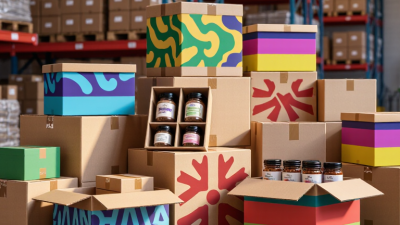
A curated selection of packaging products that fly off our shelves. Our customers love these bestsellers for their practicality and visual appeal, ensuring your products stand out and attract more buyers.
China’s packaging industry serves brands that need dependable, well-presented shipping and retail cartons. This guide introduces ten Chinese manufacturers of printed corrugated boxes, with attention to capabilities buyers can assess before requesting a quotation. A printed box is more than a colorful outer layer. Board grade, flute profile, print clarity, and converting accuracy all affect how it performs.
The companies featured may differ in factory scale, product range, service model, and export experience. Some specialize in high-volume runs; others may be better suited to custom artwork, varied sizes, or smaller orders. Details matter. When comparing suppliers, ask about sample approval, color matching, production lead times, quality checks, and protective packaging for shipment. Request current specifications and references where appropriate, rather than relying on a polished catalog alone.
A ranked list can offer a useful starting point, but it cannot replace direct verification. Capabilities change, and a strong fit for one project may not suit another. Even a small color shift can matter on a retail shelf. Buyers should compare written quotations against the same dimensions, material requirements, print coverage, and delivery terms. This overview aims to make that comparison clearer, while recognizing that supplier information may need confirmation before a purchasing decision.
Printed corrugated boxes are made from corrugated board: a fluted paper layer held between flat liner sheets. The flutes create cushioning and help the box resist stacking pressure. They also add a little texture beneath printed graphics. Board thickness and flute size affect strength, weight, and print appearance.
Manufacturing starts with paper rolls. A corrugating machine heats and shapes the medium into waves, then bonds it between liners with adhesive. The finished board is cut into sheets. Graphics are printed using flexographic or digital methods, depending on the design, order size, and required detail. The sheets then pass through cutting and creasing tools, which form slots and fold lines. Finally, they are folded and joined into boxes. Small changes in moisture can affect how neatly a box folds. That detail is easy to underestimate. No layout fits every box.
Tips: Keep essential text away from fold lines and cut edges. Ask for a printed sample, then check colors and small lettering under ordinary lighting. A highly detailed image may look different on textured board than on a smooth screen.
Choosing a corrugated box manufacturer requires more than comparing quoted prices. Start with the box’s intended use, packed weight, storage conditions, and shipping route. These details shape board grade, flute type, and box structure. Request production samples made to your specifications, not only attractive display pieces. Check print alignment, color consistency, clean folds, and glued seams under ordinary handling. Small flaws can matter.
Ask for documented quality checks, material specifications, and relevant certifications. Verify that documents are current and apply to the actual factory and product. For a practical test, load a sample box and stack it with similar cartons. Where possible, compare performance after exposure to the moisture expected in storage. Ask how the supplier handles rejected batches and repeat orders. Details matter.
Production capacity and delivery promises should match your forecast, including seasonal peaks. Discuss minimum order quantities, proofing time, and what happens when artwork changes. A site visit or live production review can clarify how inspection works. If travel is not practical, request recent process evidence and speak with a technical contact. A supplier may score well on paper and still miss a specification; no scorecard is perfect. Keep written records of sample approval and agreed tolerances.
China’s top ten printed corrugated box manufacturers should be compared by capability, not ranking alone. A useful overview looks at print quality, board strength, order flexibility, and delivery consistency. Many suppliers offer flexographic printing for larger runs and digital printing for shorter batches. The right choice depends on the product: a heavy appliance needs different flute strength from a small retail carton. Ask how samples are checked. Color can shift between a screen proof and ink on brown board.
Tips: Request a printed sample on the intended board grade. Check fold lines, color coverage, and stacking strength. Share box dimensions and expected order volume before comparing quotes.
A reliable supplier should explain material options and provide clear specifications, including board grade and box dimensions. If possible, review a production sample rather than relying only on photographs. One weakness in many comparisons is that price receives too much attention; unclear tolerances or inconsistent color can create costly rework. Still, a polished sample does not guarantee every production run will match. Confirm how quality checks are recorded and what happens when a batch falls outside agreed specifications.
Profiles of China’s ten leading printed corrugated-box manufacturers should compare products and production capabilities, not just sales claims. A useful profile identifies box styles, board grades, printing methods, converting equipment, and service regions. FEFCO’s 2022 European database recorded about 49.6 billion square metres of corrugated-board production, illustrating the industry’s scale. That benchmark is not a proxy for Chinese capacity. Numbers need context.
The China Packaging Federation reported roughly RMB 1.15 trillion in operating revenue for packaging enterprises above its designated-size threshold in 2023. This covers multiple packaging formats, so it cannot establish corrugated output on its own. For each manufacturer, look for disclosed annual capacity, actual utilisation, and the number of production lines. Ask whether quoted capacity reflects paperboard area or finished boxes; the measures are not interchangeable. Line speed alone proves little. Changeover time, print registration, die-cut accuracy, and waste rates affect usable output. A profile should also note whether the plant handles short-run designs or prioritises high-volume orders. Actual production can vary with order mix and maintenance, and public disclosures are often incomplete.
This anonymized table presents ten common manufacturer capability profiles, not a verified company ranking. Company names and brands are intentionally omitted; individual factory capacities cannot be confirmed without identifiable, independently verifiable company data.
| Profile | Typical Product Focus | Printing & Converting | Board & Material Options | Production Capability | Common Applications |
|---|---|---|---|---|---|
| Profile 1 — High-volume shipper cartons | Regular slotted cartons, shipping boxes, and standard-format outer cases | Flexographic printing; slotting, scoring, stitching or gluing | Single-wall and double-wall corrugated board; kraft or white-top liners | Line speed and annual output are factory-specific and not verifiable from an anonymized profile | E-commerce fulfillment, general merchandise, and transport packaging |
| Profile 2 — Color-printed retail packaging | Printed retail-ready cases, display cartons, and branded outer packaging | Multi-color flexographic printing; die-cutting and folder-gluing where required | Single-wall board, including fine-flute options; coated or white-top liners may be specified | Depends on press configuration, order mix, board grade, and finishing requirements | Consumer goods, supermarket displays, and point-of-sale packaging |
| Profile 3 — Heavy-duty industrial cartons | Large or load-bearing cartons, pallet boxes, and protective corrugated packaging | Flexographic printing; heavy-board converting and reinforced construction | Double-wall or triple-wall board; board strength selected for the load and distribution conditions | Capacity and maximum board specifications must be confirmed for each production site | Machinery parts, industrial components, and bulk shipments |
| Profile 4 — E-commerce parcel packaging | Mailing boxes, self-locking cartons, and compact parcel shippers | Flexographic or digital printing; rotary or flatbed die-cutting and folding | Commonly single-wall corrugated board; flute and grade selected to balance protection and size | Short-run flexibility and throughput vary by equipment and order specifications | Online retail, subscription shipments, and direct-to-consumer orders |
| Profile 5 — Food and beverage cases | Bottle cases, beverage trays, produce cartons, and food-distribution boxes | Flexographic printing; die-cutting, slotting, and gluing | Corrugated board with liner and strength specifications matched to product weight and handling | Food-contact suitability and production capacity require product- and site-specific verification | Beverage distribution, fresh produce, and packaged-food logistics |
| Profile 6 — Export and long-distance shipping boxes | Export cartons and transport cases designed for stacking and extended distribution | Flexographic printing; case-making and closure options selected for shipment needs | Single-wall or double-wall board; moisture-resistant treatments may be specified when suitable | Load performance depends on board grade, box design, humidity, and stacking conditions | International freight, contract manufacturing, and cross-border trade |
| Profile 7 — Short-run and customized packaging | Prototype boxes, seasonal packaging, and lower-volume custom cartons | Digital or flexographic printing; sample cutting and custom die-cutting | Multiple flute and liner combinations, subject to available stock and converting equipment | Suitable run length and turnaround time depend on artwork, tooling, and factory scheduling | Product launches, limited editions, sampling, and small-batch orders |
| Profile 8 — Printed die-cut cartons and displays | Die-cut retail cartons, shelf-ready packaging, and corrugated display units | Multi-color printing; flatbed or rotary die-cutting, creasing, and assembly | Fine-flute or standard corrugated board, selected for print appearance and structural needs | Tooling, cutting-bed size, and assembly capacity are equipment-specific | Retail merchandising, promotional displays, and shelf-ready distribution |
| Profile 9 — Protective and engineered packaging | Partitions, inserts, cushioning components, and multi-piece protective packs | Die-cutting, slitting, creasing, and converting; printing may be secondary | Corrugated board grades and flute structures selected to protect the item and limit movement | Performance depends on package design, product testing, and converting setup | Electronics, appliances, fragile goods, and industrial equipment |
| Profile 10 — Multi-format integrated carton production | A mix of shipping cases, printed cartons, trays, and custom corrugated formats | Printing, corrugating or sheet converting, die-cutting, and gluing capabilities vary by site | Typical options include single-wall, double-wall, and different flute profiles; exact availability is mill- and plant-dependent | Integrated capacity should be assessed using verified plant, machine, and output data | Customers requiring multiple packaging formats from a coordinated supplier |
Corrugated board commonly uses fluted paper between liner sheets. Single-wall board has one fluted medium; double-wall has two, and triple-wall has three. Flute profile, paper grade, box design, printing method, and operating conditions affect strength, print quality, and achievable production output.
A comparison of China’s leading printed corrugated box manufacturers should look beyond catalogues and price quotes. Service quality often appears in small details: how quickly a supplier checks artwork, confirms dimensions, and sends a physical sample. Ask whether color matching is reviewed under consistent lighting. It matters. A smooth sales process is useful, but it cannot replace clear approval records or reliable updates when specifications change.
Market experience varies. Some manufacturers are better suited to domestic retail packaging, while others handle export orders and adapt to different shipping requirements. Buyers should compare minimum order quantities, lead times, language support, and experience with their product category. A company serving several markets may offer broader options, yet that does not guarantee a better fit. Check references and sample consistency where possible.
Manufacturing strength depends on more than machine capacity. Printing accuracy, flute selection, board strength, and quality checks all affect how a box performs after stacking and transport. Ask how defects are recorded and corrected, not only how many boxes a facility can produce. A practical comparison may reveal trade-offs: fast turnaround can limit customization, while elaborate print work may need longer approvals. No supplier is perfect. Verify claims with samples, written specifications, and a small trial order before scaling.