China Top 10 Bulk Shipping Boxes Suppliers?
China’s bulk shipping boxes market includes large manufacturers, specialized exporters, and smaller factories serving different cargo needs. This introduction previews ten notable suppliers for buyers comparing strength, customization, lead times, and export experience. The focus is practical. A box may look simple, yet its performance depends on board grade, flute structure, adhesive quality, and stacking design.
Packaging consultant Ioannis Savvides once said, “Packaging is not decoration; it is protection, communication, and logistics.” That principle matters when selecting bulk shipping boxes for furniture, machinery parts, electronics, or retail goods. A reliable supplier should explain compression testing, moisture resistance, pallet patterns, and load limits. Buyers should also request recent samples. A polished catalog is not enough.
The companies discussed in this guide are assessed through useful signals, including production capacity, product range, customization support, quality controls, and international delivery experience. Some suppliers may excel at high-volume orders, while others may provide better support for smaller trial runs. That difference can affect total cost more than the unit price. Freight distance matters too. So does communication.
No supplier is perfect. Factory claims still require verification. Specifications can change between samples and mass production. Buyers should confirm dimensions, tolerances, print colors, and test results in writing. This guide is not a final purchasing decision. It is a starting point for careful comparison, with attention to real warehouse conditions, damaged corners, crushed edges, and the occasional mistake that a spreadsheet may miss.
What Are Bulk Shipping Boxes and Why Are They Important?
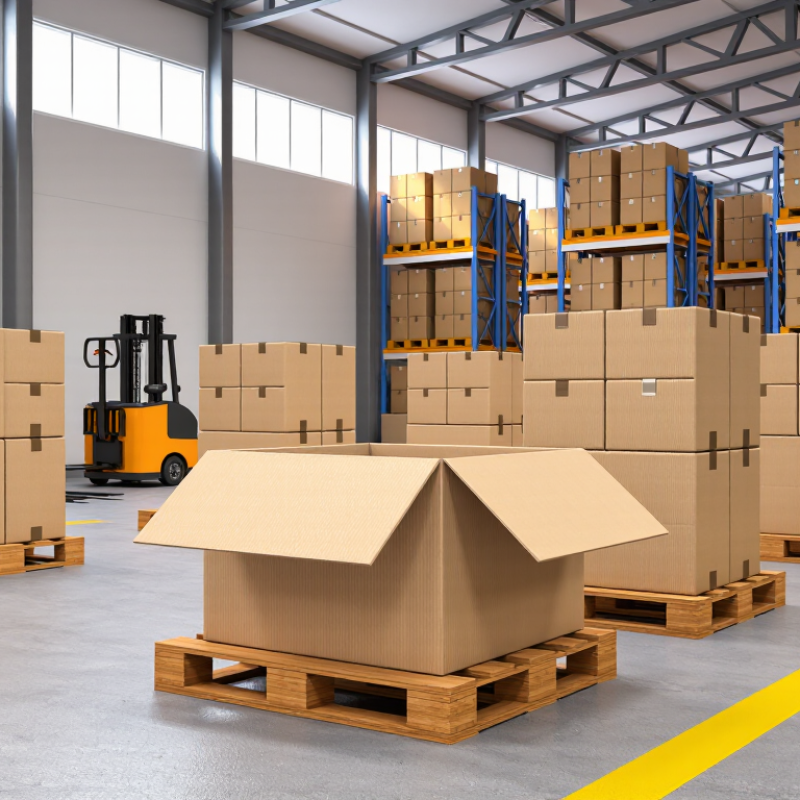
Bulk shipping boxes are large cartons designed to move many units in one shipment. They may hold spare parts, packaged food, textiles, or warehouse supplies. Most use double-wall or triple-wall corrugated board. The extra layers resist crushing during stacking and handling. A box measuring 60 by 40 by 40 centimeters can protect dozens of smaller packs when properly fitted. Size alone does not guarantee safety. Interior movement remains a common failure point.
These boxes matter because they reduce repeated handling, packaging waste, and transport space. A well-designed carton can keep products stable on a pallet and lower the risk of dents, moisture exposure, and torn seals. In practice, I check the box dimensions, compression rating, closure method, and expected route before approving a shipment. Long storage requires stronger board than a short indoor transfer. Humid warehouses can weaken ordinary corrugated material surprisingly fast. That detail is often missed.
Reliable suppliers should provide test data, material specifications, sampling support, and consistent production tolerances. Ask whether the box passed edge-crush or compression testing under realistic conditions. Small differences matter. A box that fits perfectly may still fail if the load is uneven. I have also found that “recyclable” does not always mean easy to recycle locally. Coatings, tape, and contamination can change the result. Reviewing actual samples is wiser than trusting a catalog photograph. Suppliers should explain customization limits, minimum order quantities, and safe stacking guidance.
China Top 10 Bulk Shipping Boxes Suppliers? What Are Bulk Shipping Boxes and Why Are They Important?
Bulk shipping boxes are large corrugated containers designed to consolidate and protect high-volume products during storage, handling, and transportation. The chart below compares ten representative, supplier-neutral box configurations by nominal internal volume. Volumes are calculated from the listed dimensions using 1 cubic foot = 1,728 cubic inches.
Larger box volume can improve consolidation efficiency, but the appropriate box also depends on corrugated board strength, product weight, stacking requirements, moisture exposure, and pallet compatibility.
How to Evaluate China’s Top Bulk Shipping Box Suppliers
China’s top bulk shipping box suppliers should be judged by evidence, not catalog size. Smithers’ 2024 corrugated packaging study estimates the global market at about US$205 billion in 2023. It also forecasts continued growth through 2029. That scale increases sourcing options, but it can hide uneven quality. Ask for recent production photos, factory audit records, and batch-level test data. A polished sample proves little.
Start with engineering fit. Compare ECT, BCT, moisture resistance, flute profile, board grammage, and empty-box weight. Require test methods, conditioning time, and failure limits. ISO 12048 supports compression testing for filled transport packages, while ISTA 3E examines unitized loads during distribution handling. These references make supplier comparisons less subjective.
Still, a laboratory result cannot replace a trial shipment. Pallets shift. Humidity changes.
Audit process controls, not only machinery. Check incoming paper inspection, glue control, print registration, die-cut tolerance, and traceability. ISO 9001 certification is useful, but verify its scope and renewal status. The World Bank’s 2023 Logistics Performance Index gave China a 3.7 overall score, showing strong logistics capacity with room for friction. Request two or three production lots before signing. I would also price damage claims, spare stock, and lead-time variance. The cheapest quotation may be the least reliable calculation.
Top 10 Bulk Shipping Box Suppliers in China
Top 10 Bulk Shipping Box Suppliers in China
Selecting reliable bulk shipping box suppliers in China requires more than comparing quoted prices. A practical shortlist should examine factory experience, material traceability, production capacity, and export documentation. The strongest suppliers usually provide single-wall, double-wall, and heavy-duty corrugated boxes for different cargo weights. They can also adjust box length, width, height, flute type, printing, and moisture resistance.
The top ten supplier groups typically include large corrugated carton factories, custom packaging manufacturers, export-focused box producers, and regional plants near major ports. Some specialize in e-commerce mailers, while others handle pallet-sized cartons for machinery or furniture.
During factory checks, buyers should request recent compression-test records, sample cartons, paper specifications, and production photographs. Check the box seams carefully. Weak glue lines can fail during humid transport.
Reliable suppliers explain minimum order quantities, tooling charges, lead times, and replacement policies in writing. They should also support pre-shipment inspections and consistent batch testing.
However, not every attractive sample reflects mass-production quality. That is an easy mistake. A better process compares three production batches, not one polished sample. Suppliers with clear communication and stable quality control often reduce hidden costs, even when their first quotation is not the lowest. Suppliers handling international orders should understand common packaging requirements and provide accurate commercial documents.
How to Select the Right Chinese Supplier for Your Business
Choosing among China’s top bulk shipping box suppliers requires more than comparing prices. Start with your product’s exact needs: box dimensions, board strength, printing, moisture resistance, and stacking conditions. Ask for a written specification sheet. It should state paper grade, flute type, bursting strength, and size tolerance.
Request physical samples before placing a large order. Test them with your real products, warehouse shelves, and shipping route. A box that survives a local drop test may fail after several days in humid transit. Check the supplier’s production capacity, quality records, export experience, and inspection process. Factory photos are useful, but an independent audit provides stronger evidence. Confirm minimum order quantities, tooling costs, lead times, packaging methods, and payment terms in writing. A cheap quote can hide weak material or unstable delivery. I have learned that clear drawings prevent more problems than friendly promises. Still, no supplier is perfect; allow time for corrections.
Tips: Compare at least three written quotations with identical specifications. Ask how they handle damaged cartons and delayed shipments. Request a trial order before scaling up. Keep approved samples and inspection photos in one file. Measure delivered boxes, because small size differences can affect storage and freight costs. Communication matters too. Slow, unclear replies may become expensive during production. Consider a supplier’s response to difficult questions, not only its sales presentation.