Why Choose Quartzite for Your Next Project?
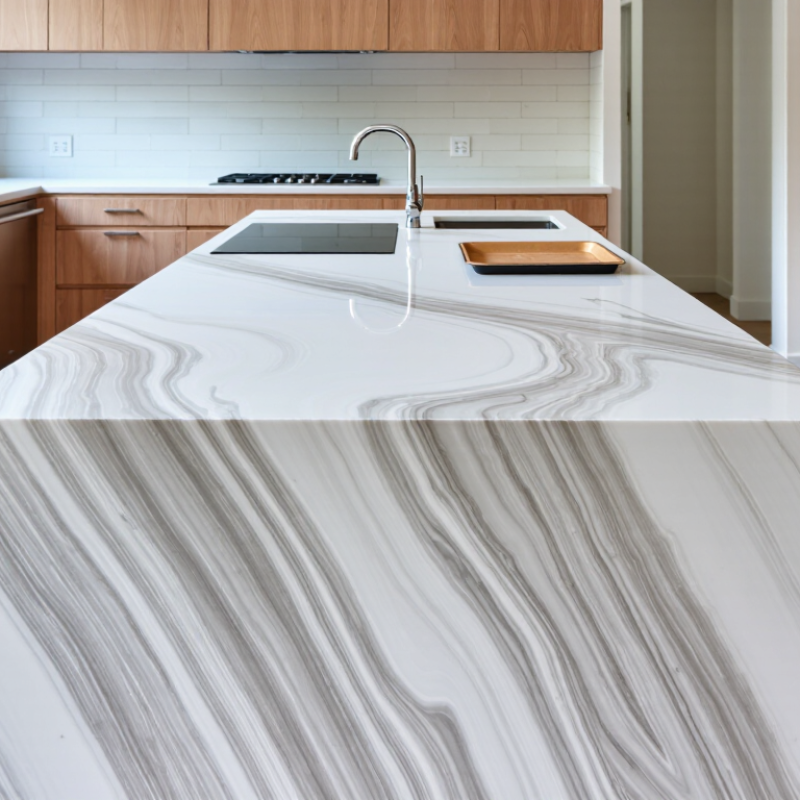
quartzite is gaining attention as homeowners and designers seek surfaces that combine natural beauty with demanding everyday performance. Its crystalline structure creates dramatic veining, subtle movement, and a stone-like depth that engineered materials cannot fully reproduce. In a kitchen, imagine a softly honed island reflecting morning light while resisting heat from a nearby baking tray.
Industry data supports this growing interest. The U.S. Geological Survey’s Mineral Commodity Summaries identifies dimension stone as an established construction material with continuing demand across residential and commercial projects. Reports from the Natural Stone Institute also emphasize stone’s long service life, repair potential, and reduced replacement frequency. Those advantages matter when buyers consider a surface beyond its first photograph.
“Natural stone is the original green building material,” says Jim Hieb, former CEO of the Natural Stone Institute. That statement is persuasive, but it needs context. Quarrying, transportation, sealing, and fabrication still create environmental impacts. Quartzite is not automatically sustainable because it is natural.
Its performance remains compelling. Many quartzite varieties offer strong resistance to scratching, moderate heat tolerance, and excellent visual longevity. However, quality varies. Some slabs sold as “soft quartzite” may contain marble-like minerals and require more careful maintenance. A professional fabricator should test the slab, review its mineral composition, and recommend the correct sealer.
There is no perfect surface.
The strongest choice balances appearance, use, maintenance, budget, and verified sourcing. With that practical view, quartzite can become more than a luxury finish. It can serve as a durable, tactile centerpiece for a thoughtfully planned project.
Quartzite Defined: Geology, Mineral Composition, and Mohs Hardness 7
Why Choose Quartzite for Your Next Project?
Quartzite is a natural metamorphic rock formed when quartz-rich sandstone faces intense heat and pressure underground. This process fuses the original grains into a dense, interlocking structure. The result is not simply “hard sandstone.” Its geology is more complex.
Quartzite usually contains more than 90% quartz, although exact mineral content varies by quarry and formation. Small amounts of feldspar, mica, iron oxides, or garnet can change its color and texture. White slabs may show soft gray veins, while iron minerals can create warm gold or rust tones. Every piece records a different geological history.
Its typical Mohs hardness is about 7, matching quartz. That rating places it above glass and many common decorative stones. It can resist scratching from everyday contact, but hardness does not make it indestructible. A sharp impact can still chip an edge. Some quartzite also absorbs moisture, depending on its mineral structure and porosity. Testing a sample before fabrication is wise. A water-drop test can reveal darkening, though it should not replace professional evaluation. I have seen hardness used as the only selection rule, and that approach is incomplete. Quartzite can be durable, yet the slab, finish, thickness, and installation details still matter. A careful inspection under natural light may reveal hairline fissures or mineral pockets before cutting begins.
How Quartzite Compares with Granite and Marble in Industry Performance
Why Choose Quartzite for Your Next Project?
How Quartzite Compares with Granite and Marble in Industry Performance
Quartzite performs strongly where hardness, heat resistance, and visual depth matter. Its dense surface usually resists scratching better than marble. It also handles busy kitchen counters, hotel reception desks, and exterior applications with confidence. Granite remains highly durable and often offers easier fabrication. Quartzite can demand slower cutting and sharper diamond tooling. That difference affects labor costs and installation schedules.
Marble creates softer movement and a refined appearance, but its surface requires more discipline. Acids from citrus, wine, or cleaning products can etch many marble varieties. Quartzite generally tolerates these exposures better, although sealing still matters. Absorption varies between slabs. Testing the actual material is wiser than trusting a sales label.
There is an important industry complication. Some stones sold as quartzite contain softer minerals or resemble dolomitic marble. A reputable supplier should provide technical data and, when necessary, independent petrographic testing. Fabricators must also inspect veining, hidden fissures, and slab thickness before cutting. No material wins every specification. Quartzite may be the wrong choice for a tight budget or a highly intricate edge profile. Granite can be more practical there. Marble may still suit low-traffic spaces where appearance outweighs maintenance demands. The decision deserves evidence, not fashion.
Design Applications: Matching Quartzite Grades to Interior and Exterior Projects
Why Choose Quartzite for Your Next Project?
Design applications depend on more than color. Quartzite grades must match the room, traffic level, climate, and maintenance plan. ASTM C616/C616M evaluates quartz-based dimension stone through properties such as absorption, density, and compressive strength. However, “premium” and “commercial” grades are not globally standardized. Ask for laboratory results, not only a showroom label. That distinction matters.
For interior walls, vanity tops, and low-traffic counters, a carefully selected visual grade can emphasize quartzite’s layered movement. Inspect slabs under natural and warm lighting. Fine veining may appear calm indoors but become distracting across a large island. For busy floors, stairs, or hospitality spaces, prioritize consistent thickness, lower absorption, and verified abrasion performance. The U.S. Geological Survey’s 2024 Mineral Commodity Summaries reported roughly 1.5 million metric tons of U.S. dimension-stone production in 2023, showing the scale of a market where quality control cannot be an afterthought.
Exterior projects require tougher screening. Freeze-thaw exposure, salt, standing water, and direct sunlight can change the risk profile. For façades, terraces, and outdoor kitchens, request freeze-thaw testing, water-absorption data, and installation guidance from qualified fabricators. I have seen beautiful stone fail when drainage was ignored. Sometimes, the stone was blamed unfairly. The installation was the real weakness. Recheck the source, finish, edge details, and sealant compatibility before approving a grade.
Why Choose Quartzite for Your Next Project?
Design Applications: Matching Quartzite Grades to Interior and Exterior Projects
The suitability scores are a practical planning guide based on common quartzite selection factors, including low water absorption, resistance to scratching, durability, and exposure to weather. Higher-grade selections are generally preferred for demanding exterior applications, while properly sealed commercial and select grades can perform well in many interior projects. Actual performance depends on the specific slab, finish, installation, and test documentation.
Quartzite Selection: Slab Quality, Finish Options, Maintenance, and Cost Factors
Why Choose Quartzite for Your Next Project?
Quartzite Selection: Slab Quality, Finish Options, Maintenance, and Cost Factors
Quartzite earns attention for its strength, natural movement, and heat resistance. Its hardness suits busy kitchen counters, bathroom vanities, and commercial surfaces. Yet slab quality varies. Before approval, inspect the entire slab, not just a small sample. Look for hairline cracks, open fissures, uneven thickness, and distracting resin repairs. Ask the fabricator to confirm the stone’s composition and recommended care. A sample is not enough. That detail is easy to overlook.
Finish changes both appearance and daily maintenance. Polished quartzite reflects light and usually resists staining better. Honed surfaces create a softer, more muted look, but fingerprints and marks may show more clearly. Leathered finishes add texture under your fingertips and can hide minor smudges. Run your hand across the sample before deciding. Quartzite generally needs periodic sealing, depending on porosity and use. Wipe spills promptly with a pH-neutral cleaner. Avoid abrasive powders and harsh acids. A polished showroom piece can make maintenance look simpler than it really is.
Cost includes more than the slab price. Include thickness, edge profiles, sink cutouts, backsplash pieces, delivery, installation access, and material waste. Bookmatched patterns often require additional slabs. Complex corners can increase fabrication time. Get a detailed quote with measurements and exclusions. Quartzite is not always the cheapest option. However, its durability may support long-term value when selected carefully. My preference would not be based on color alone. Performance deserves equal attention.