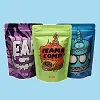
A curated selection of packaging products that fly off our shelves. Our customers love these bestsellers for their practicality and visual appeal, ensuring your products stand out and attract more buyers.
The global food packaging industry is changing quickly. Buyers now expect safety, convenience, and measurable environmental responsibility. Smithers’ industry analysis identifies food packaging as a major driver of packaging demand, supported by takeaway meals, delivery services, and household storage needs. Grand View Research also reports continued growth in disposable food packaging, especially across Asia-Pacific markets.
China has become a significant manufacturing base for Disposable Food Storage Containers. Its advantages are practical: broad resin supply, mature tooling networks, automated production lines, and competitive export logistics. A capable Chinese factory can offer polypropylene containers, PET trays, microwave-safe designs, and leak-resistant lids in several sizes. Picture a 750-milliliter container holding soup without bending during delivery. Small details matter.
Not every supplier deserves the label “best.”
The difference depends on documented controls. Professional buyers should review food-contact declarations, migration testing, material traceability, production audits, and batch inspection records. Relevant requirements may include China’s GB 4806 food-contact standards, while export projects may require EU or U.S. compliance documentation. The U.S. FDA’s food-contact framework and European Food Safety Authority guidance provide useful reference points, but certificates must match the actual material and intended use.
China’s best manufacturers combine scale with engineering discipline. They adjust wall thickness, lid sealing, stacking strength, and temperature resistance for real applications. However, price alone can hide weak quality systems. A transparent supplier should provide samples, test reports, factory evidence, and clear corrective actions. The strongest purchasing decision is not simply about buying cheaper containers. It is about reducing leakage, complaints, waste, and supply uncertainty through verifiable performance.
Disposable food storage containers are lightweight vessels designed to hold, protect, and transport food for a limited period. They are commonly made from food-grade plastic, paperboard, or aluminum. Many include matching lids, which help reduce spills during delivery, picnics, and meal preparation.
In practical use, container quality depends on more than appearance. A reliable container should resist leaks, tolerate the intended temperature, and close securely. Chinese manufacturers offer many production options because they support large-scale molding, printing, and packaging. However, “best” should never mean cheapest. Buyers should request material details, sample testing, dimensional checks, and clear food-contact documentation.
I once underestimated lid fit during a sample review. The container looked strong, but a small gap caused sauce to escape. That mistake was useful.
Tips: Match the container to the food. Use grease-resistant options for oily meals and sturdier designs for heavier portions. Check whether the material suits hot or cold storage. Avoid assuming every disposable container is microwave-safe or freezer-safe. Ask for written instructions. Inspect samples with real food, not only empty containers. A clean seal matters. So does responsible disposal, which is sometimes overlooked during busy service.
Why choose China-made food storage containers? The answer is not simply lower pricing. UNIDO’s International Yearbook of Industrial Statistics 2024 reports that China produced about 31% of global manufacturing value added in 2022. This industrial depth supports mold engineering, automated inspection, and stable high-volume output. During a factory audit, a reliable supplier should show resin certificates, batch records, and retained samples. Ask to see them. A lid should close evenly and resist leakage after repeated opening, refrigeration, and a simple shake test. Food-contact documents must match the destination market. “Food grade” alone proves little.
The OECD’s Global Plastics Outlook states that packaging generated 40% of global plastic waste in 2019. That figure makes material efficiency a purchasing issue, not just a design detail. China-based manufacturers can adjust polypropylene or polyethylene thickness, nesting depth, lid geometry, and carton size. These changes may reduce shipping volume and improve warehouse handling. But thinner is not automatically better. Repeated flexing can warp a lid. Request migration testing, freezer and microwave validation, drop tests, and clear recycling identification. I would compare three production samples, not one polished sample. Communication can still fail through unclear tolerances or changing molds. A written drawing with dimensions, closure force, and inspection limits prevents many disputes. That discipline is less exciting than a low quotation, yet it is where reliability becomes visible.
Material choice should follow the food, temperature, and storage time. Food-grade polypropylene suits hot soups because it tolerates heat and resists moisture. PET offers clear visibility for salads, fruit, and chilled meals. Molded fiber can reduce plastic use, but it may soften when exposed to oily sauces. That detail is often missed. The FDA Food Code 2022 stresses clean, suitable food-contact surfaces and temperature control. A safe container also needs migration testing, traceable production records, and clear use instructions. “Food-grade” alone is not enough.
Design affects food safety more than appearance. Tight-fitting lids reduce leaks and outside contamination during delivery. Smooth corners make washing and inspection easier before filling. Stackable shapes protect food from crushing and reduce warehouse space. UNEP’s Food Waste Index Report 2024 estimated 1.05 billion tonnes of food were wasted in 2022. Better portion sizing and secure packaging may prevent part of this loss, although packaging cannot solve waste by itself. I would not overclaim that. Real performance depends on handling.
Tips: Request food-contact test reports, heat limits, and batch traceability. Check whether lids and bases use compatible materials. Test containers with real soup, oil, freezing, and transport conditions. A small leak test can reveal a large design mistake. Inspect samples before placing a large order.
Why Buy China Best Disposable Food Storage Containers?
How Do Quality, Customization, and Pricing Compare?
Buying from China can be practical, but “best” needs evidence. In factory audits, look beyond clear plastic and polished photos. Request resin specifications, food-contact declarations, seal tests, and batch samples. The details matter. FAO’s The State of Food and Agriculture 2019 estimates that 14% of food is lost between harvest and retail. A weak lid can increase that waste, even when the unit price looks attractive.
Quality and customization often move together. Suppliers can adjust wall thickness, lid geometry, compartments, color, labels, and carton dimensions. However, each change may require new tooling or higher minimum order quantities. Independent migration testing, odor checks, freezer-to-microwave stress tests, and dimensional inspections improve comparisons. ISO 22000-based systems support supplier evaluation. Certification alone does not guarantee a perfect product. It is only one piece of evidence.
Pricing should be compared as landed cost, not factory price. Include tooling, inspection, packaging, shipping, duties, storage, and rejected units. Smithers’ 2024 packaging outlook forecasts global packaging demand above US$1.2 trillion by 2028. That scale can support competitive quotations, especially for repeat orders. Small orders may lose this advantage through freight and tooling. A pilot batch is wiser. It costs more upfront. Still, it can expose warping, leakage, and printing defects before a larger commitment. Some “custom” offers remain limited; difficult questions are safer than assumptions.
| Container Type | Typical Material | Typical Temperature Performance | Quality Characteristics | Customization Options | Indicative FOB Price* | Typical MOQ | Typical Production Lead Time |
|---|---|---|---|---|---|---|---|
| Clear Food Storage Tub | Polypropylene (PP) | Commonly suitable for chilled and hot-food applications; exact limits depend on formulation and design. | Good impact resistance, low density, and practical resistance to oils and moisture. Food-contact compliance must be verified by documentation. | Color matching, embossed or printed logos, lid design, compartment layouts, and size changes. | Approximately US$45–140 per 1,000 pieces, depending on size, wall thickness, lid type, and order volume. | Usually 10,000–50,000 pieces for standard items; higher for customized molds. | About 20–35 days after artwork and specifications are approved. |
| Transparent Deli Container | Polyethylene terephthalate (PET) | Best suited to refrigerated or room-temperature food; generally not selected for high-temperature heating. | High clarity, good stiffness, and attractive product visibility. Heat resistance is lower than that of many PP designs. | Clear or tinted color, label application, lid fit, surface finish, and custom dimensions. | Approximately US$40–125 per 1,000 pieces for common sizes. | Usually 10,000–50,000 pieces for stock or semi-custom products. | About 15–30 days for standard designs; custom tooling may add several weeks. |
| Microwaveable Meal Tray | Heat-resistant PP | Often designed for reheating within a specified temperature range; the supplier’s test conditions must be confirmed. | Rigid structure, good seal compatibility, and resistance to many common food oils. Venting and warpage control are important. | Multiple compartments, tamper-evident features, vented lids, printed sleeves, and custom tooling. | Approximately US$70–220 per 1,000 pieces, depending on compartments, thickness, and lid construction. | Commonly 20,000–100,000 pieces for customized configurations. | About 25–45 days after tooling and pre-production approval. |
| Compostable Food Container | Molded bagasse or other certified fiber material | Suitable for many hot and cold foods; performance varies with coatings, moisture exposure, and product design. | Renewable-fiber appearance and good rigidity. Moisture and grease resistance depend on the barrier treatment. | Shape, molded texture, embossing, sleeve printing, color, and lid configuration. | Approximately US$85–260 per 1,000 pieces for common food-service sizes. | Usually 30,000–100,000 pieces for custom shapes or packaging artwork. | About 30–50 days, depending on molding, drying, coating, and packaging requirements. |
| Aluminum Food Tray | Food-grade aluminum foil | Suitable for many oven and freezer applications when the product specification allows; not suitable for microwave use. | Strong thermal conductivity, good barrier performance, and resistance to light and oxygen. Edge quality and foil thickness require inspection. | Shape, rim profile, foil thickness, embossed markings, paperboard sleeves, and lidding film. | Approximately US$90–300 per 1,000 pieces, largely influenced by aluminum thickness and dimensions. | Often 20,000–100,000 pieces for custom dimensions or printed packaging. | About 20–40 days after design confirmation. |
Why Buy China Best Disposable Food Storage Containers?
What Should Buyers Check Before Placing an Order?
A low price should never be the only reason to choose disposable food storage containers from China. Buyers should request physical samples before discussing large quantities. Check the lid fit, wall thickness, surface smoothness, and container dimensions by hand. A weak corner may crack during stacking or transport. Test the seal with water, sauce, and a short refrigerator cycle.
Ask for the exact material specification and food-contact testing documents. Confirm whether the containers suit hot food, frozen storage, microwave use, or only cold meals. Requirements differ across markets, so compare supplier documents with your destination’s current regulations. Do not accept unclear phrases such as “food grade” without supporting evidence. It sounds reassuring, but it proves very little.
Production details deserve equal attention. Review the minimum order quantity, mold ownership, carton strength, printing options, and estimated lead time. Request batch inspection records when possible. A simple drop test can reveal more than polished photos. I once underestimated carton quality; several lids arrived scratched after ordinary handling. That mistake changed my checking process. Still, documents can be incomplete, and samples may not represent every batch. Keep that uncertainty visible, use third-party inspection when needed, and agree on measurable acceptance standards before payment.
Before placing an order, buyers should evaluate more than price. The chart presents a practical 100-point purchasing framework covering food-contact compliance, material suitability, product performance, and supply reliability.
This scoring framework is a planning tool rather than a market survey. Buyers should request current compliance documents, product samples, temperature-use information, inspection records, and shipping details before confirming an order.