Why Choose Aluminium Beer Cans for Global Packaging?
Why Choose Aluminium Beer Cans for Global Packaging? The answer begins with weight, circulation, and measurable recovery. Aluminium Beer Cans are light enough to reduce transport loads, yet strong enough to protect beer from light, oxygen, and handling damage. Their cylindrical shape also uses warehouse space efficiently, from stacked pallets to refrigerated shelves.
Industry data supports this choice, but it needs careful reading. The Can Manufacturers Institute reported that aluminium beverage cans in the United States reached a 43% recycling rate in 2022, with approximately 71% recycled content. The International Aluminium Institute states that recycling aluminium can save up to 95% of the energy required for primary production. These figures show a valuable circular advantage. They do not mean every can returns to production.
Tom Dobbins, President and CEO of the Aluminum Association, has stated, “Aluminum can be recycled again and again without losing its properties.” That durability matters for global packaging systems. A used can can become another can, rather than remaining waste for decades. However, collection infrastructure differs widely between countries. That gap deserves attention. A recyclable package still needs consumers, retailers, and local systems to recover it.
For breweries, Aluminium Beer Cans offer practical branding space, dependable filling performance, and lower shipping weight. For consumers, they chill quickly and fit easily into a backpack or cooler. The environmental case is strong, but not automatic. Responsible sourcing, efficient logistics, higher collection rates, and transparent reporting must accompany the material choice. That is where aluminium’s promise becomes measurable.
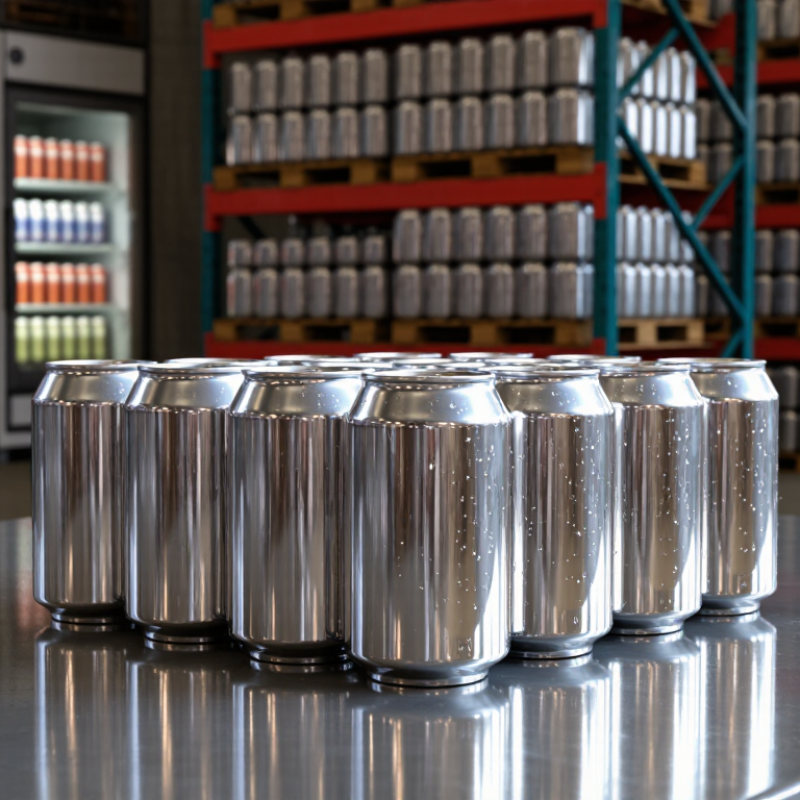
What Are Aluminium Beer Cans?
Aluminium beer cans are lightweight, recyclable containers formed from rolled aluminium sheet. Manufacturers shape the body through drawing and wall ironing. The result is a thin can with strong vertical walls and a smooth, familiar grip. Its metal structure blocks light and helps protect beer from oxygen. That matters because light can damage flavour compounds.
A can includes more than aluminium. It has an internal food-grade coating, a separate end, and a pull tab. The coating separates the beverage from the metal. The end is carefully scored, so consumers can open it with controlled pressure. During production, precision matters. A small defect may cause leakage, although modern inspection systems detect many faults before filling.
The International Aluminium Institute reports that recycled aluminium uses about 5% of the energy required for primary aluminium production. This supports the can’s circular packaging potential. European Aluminium reported a 76% beverage-can recycling rate in Europe in 2021. The figure is encouraging, but recycling systems differ widely between countries. A can is not automatically sustainable after purchase. It must be collected, sorted, and remelted. Industry reports often highlight recovery, yet they may understate transport, coating, and production impacts. That is worth questioning. For global packaging, aluminium beer cans offer durability, low weight, and strong material value, but their performance depends on the entire recovery chain.
How Aluminium Beer Cans Are Manufactured
Why Choose Aluminium Beer Cans for Global Packaging?
How Aluminium Beer Cans Are Manufactured
Manufacturing begins with large aluminium coils, not finished cans. The coil is lubricated and pressed into shallow cups at high speed. Drawing and ironing then stretch each cup into a taller, thinner container. The walls become remarkably light. The base remains thicker for strength.
After shaping, cans are trimmed to a precise height. They pass through washing stages to remove forming oils and metal particles. A protective internal coating is sprayed inside each can. This layer helps separate the beverage from aluminium. External decoration is applied next, followed by varnish for handling resistance. Necking and flanging prepare the opening for the lid.
Quality checks use cameras, pressure tests, and dimensional gauges. A tiny wrinkle near the rim can disrupt sealing. Small defects matter. They can create waste.
The International Aluminium Institute reports that recycled aluminium requires about 5% of the energy used for primary aluminium. Its industry data also supports aluminium’s repeated recyclability without major material degradation. This advantage depends on effective collection and remelting systems, however. It is not automatic. The Can Manufacturers Institute has reported that aluminium beverage cans can return to shelves within roughly 60 days in efficient recycling loops. Real-world performance varies by region. Transport distance, collection quality, and recycled content still need careful review.
Why Choose Aluminium Beer Cans for Global Packaging?
Energy demand for producing aluminium, indexed to primary aluminium production
Aluminium cans can be recycled repeatedly without losing the metal’s essential properties. Producing aluminium from recycled material requires approximately 5% of the energy used for primary aluminium production, making recycling a major advantage in the can manufacturing cycle. The typical process includes melting, casting, rolling, forming, filling, collection, and remelting.
Source basis: International Aluminium Institute and U.S. Environmental Protection Agency industry estimates. Values are normalized energy indices and represent industry-wide production routes rather than any company or brand.
Why Aluminium Protects Beer Quality
Beer quality begins long before the first pour. Packaging must control light, oxygen, moisture, and temperature changes during storage and transport. Aluminium cans provide a strong barrier against light and moisture. That matters because light exposure can damage hop aromas and create unpleasant flavor notes. The metal also limits oxygen entry when the can is properly formed and sealed. Freshness is protected.
Inside the can, a food-contact lining separates the beverage from the metal. This layer helps preserve flavor and supports consistent product performance. Quality teams still inspect coating coverage, seam integrity, and internal pressure. A small sealing defect can matter. During distribution, the can offers useful resistance to handling impacts, although dents remain possible. Temperature abuse is another concern; aluminium cannot repair poor storage conditions. That limitation deserves attention.
For global packaging, low weight can reduce transport energy and simplify pallet planning. Aluminium is also widely recyclable when collection and sorting systems work effectively. However, recycling rates vary by region, and recovery is not automatic. Responsible packaging decisions should examine local infrastructure, filling controls, and end-of-life routes. Engineers should test real shipping conditions, not rely on assumptions. Real shipping data often changes the preferred specification.