✕

Top 10 Tinted Plastic Film Suppliers for Global Buyers

Choosing a reliable supplier for Tinted Plastic Film takes more than comparing price lists. Global buyers must match the film to its intended use, whether it is for packaging, window applications, print protection, or product display. Tint consistency, thickness, roll width, surface finish, and light transmission can affect both appearance and performance. Ask for a current technical datasheet and a physical sample before placing a large order. Samples matter.

This Top 10 guide offers a practical starting point for comparing suppliers, not a universal ranking. It considers product range, manufacturing capability, quality documentation, customization options, communication, and export support. Buyers should also confirm minimum order quantities, lead times, packaging details, and how defects or specification changes are handled. A glossy sample can still mislead. Test the material under the lighting and conditions it will actually face, and compare the results against written specifications. Supplier websites and sales responses are useful, but they do not replace verification. Some details may remain unclear until a sample or quotation is reviewed; that is a limitation worth acknowledging. No shortlist is perfect. Use the profiles to narrow your options, then ask direct questions and document agreed requirements before committing.

Top 10 Tinted Plastic Film Suppliers for Global Buyers

Understanding Tinted Plastic Film and Its Key Applications

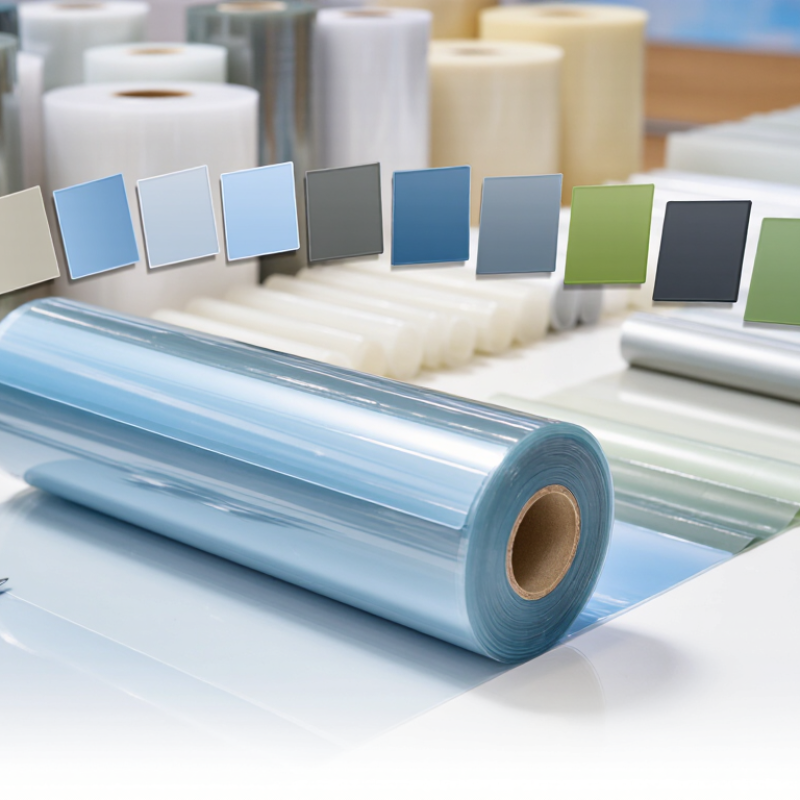
Tinted plastic film is a polymer sheet designed to control light transmission, glare, or color. Common materials include PET, PVC, and polycarbonate. Each responds differently to heat, weather, and forming. Color matters. Buyers should compare visible-light transmission, haze, UV resistance, thickness, and color stability—not shade alone.

For windows, solar-control film can reduce glare and incoming heat while retaining daylight. The U.S. Department of Energy’s Energy Saver guidance estimates that windows account for 25–30% of residential heating and cooling energy use. That figure describes window-related energy flows, not guaranteed savings from film. In vehicles, tinted films help manage cabin glare; in greenhouses, carefully selected light transmission can protect crops from intense exposure.

Tinted films also serve packaging and protective laminates, where color can distinguish products or reduce light exposure. UNEP’s 2023 Global Status Report for Buildings and Construction reports that buildings used 34% of global energy demand in 2022, adding context to interest in solar-control materials. Still, darker is not always better. A film can reduce useful daylight, alter color appearance, or absorb heat in unsuitable glazing. Test a sample on the actual surface; product data may not capture every real-world condition.

Criteria for Evaluating Tinted Plastic Film Suppliers

When evaluating tinted plastic film suppliers, begin with measurable product details. Ask for the polymer type, thickness range, roll width, and available tint options. Color should remain consistent across the roll, not just in a small showroom sample. Request samples from more than one production batch when color accuracy matters. Small differences can become obvious across a large window or display panel.

Check performance against the film’s intended use. Ask for test data on light transmission, haze, UV resistance, and dimensional stability, where relevant. The methods and conditions behind each result matter. A number without a test method tells you little. Inspect samples under both daylight and indoor lighting; a tint may look different under each. No sample is perfect. Still, defects such as streaks, bubbles, or uneven edges should be discussed before ordering.

Supplier reliability also shows in documentation and communication. Confirm that specifications, tolerances, packaging, and lead times are recorded in writing. Ask how batches are identified and how quality checks are documented. If reports are unclear, request clarification rather than assuming they meet your needs. A quick reply is helpful, but a precise one is better. Consider a trial order before committing to large volumes, especially when the application has strict appearance requirements.

Profiles of Ten Suppliers Serving Global Markets

These ten profiles examine suppliers serving global buyers of tinted plastic film. They compare manufacturing scope, film thickness, available widths, tint consistency, and support for custom orders. Some focus on high-volume production; others may offer smaller runs or more specialized specifications. Details matter. Together, the profiles help buyers see where capabilities differ, without assuming every supplier serves every application.

The OECD’s Global Plastics Outlook (2022) estimated global plastics production at 460 million tonnes in 2019. It also reported 353 million tonnes of plastic waste, with only 9% recycled. These figures cover plastics broadly, not tinted film alone. Still, they give procurement teams useful context: material efficiency and clear product data deserve attention alongside price and color choice.

Across the profiles, buyers can look for published film gauges, color-matching processes, production capacity, and transparent quality documentation. Ask how tint variation is checked across a roll, not just on a sample swatch. Requesting comparable specifications can make supplier quotes easier to assess. It is not a perfect comparison; suppliers describe performance differently, and public details may be incomplete. A careful profile review should reveal both strengths and unanswered questions.

Comparing Product Range, Customization, and Quality Standards

For global buyers comparing ten tinted-film suppliers, product breadth matters only when specifications match the application. Check available polymers, thicknesses, roll widths, tint opacity, UV resistance, and surface treatments. Ask whether suppliers can match a physical color sample and maintain an agreed tolerance across production batches. Small shade shifts can show clearly on wide, backlit panels.

Customization should be documented, not promised verbally. Request trial rolls, technical data sheets, and lot-level test records before approving volume orders. ASTM D1003 measures haze, while ASTM D882 evaluates tensile properties; neither replaces testing under actual processing conditions. The OECD’s Global Plastics Outlook (2022) estimates that only 9% of plastic waste was recycled in 2019. This makes recycled-content claims worth verifying through traceability and material declarations. ISO 9001 certification indicates a quality-management system, but does not prove every roll meets buyer requirements. A polished certificate is not the same as consistent output. Ask about inspection frequency, defect limits, and corrective-action records. Suppliers may not share every internal detail; that limitation deserves a candid discussion.

Top 10 Tinted Plastic Film Suppliers for Global Buyers - Comparing Product Range, Customization, and Quality Standards

The entries below are anonymous supplier profiles representing common capabilities in the tinted-film market, not named or ranked companies. Actual materials, specifications, certifications, and testing options vary by supplier and order; confirm them directly before purchasing.

Supplier Profile Typical Product Range Common Customization Options Quality Checks and Relevant Standards Best Fit for Buyers
01 — Packaging Film Converter Tinted PE and PP films for flexible packaging, liners, and general wrapping. Color matching, roll width and length, print-ready surfaces, and slit rolls. Request thickness and roll-dimension checks; ASTM D882 can be used to measure tensile properties of thin plastic sheeting. Buyers needing colored packaging film in converted roll formats.
02 — PET Film Specialist Tinted polyester (PET) film for labels, overlays, insulation, and industrial converting. Tint level, surface treatment, roll dimensions, and one- or two-sided coating options where available. Check thickness, color consistency, and tensile properties; ASTM D882 is relevant for tensile testing of thin plastic sheeting. Applications requiring dimensional stability and a polyester film base.
03 — PVC Film Producer Rigid or flexible tinted PVC film for cards, stationery, covers, and fabrication. Color, flexibility, surface finish, sheet or roll format, and formulation subject to application requirements. Confirm formulation and intended-use compliance; request batch records and relevant physical-property test reports. Buyers who specifically require PVC and can define the required flexibility and end use.
04 — Window and Solar-Control Film Converter Tinted films intended for glazing, with product options that may include solar-control or UV-related performance claims. Shade, visible-light transmission targets, roll size, and adhesive or surface options by product design. For transparent films, ASTM D1003 measures haze and luminous transmittance. Request test conditions and product-specific performance data. Building or vehicle glazing buyers comparing appearance and measured optical performance.
05 — Agricultural Film Supplier Tinted PE films for greenhouse, horticultural, and crop-cover applications. Color, roll dimensions, and additive packages such as UV stabilizers where offered and appropriate for the application. Request outdoor-aging evidence and warranty conditions. ISO 4892-2 describes xenon-arc exposure methods for laboratory weathering of plastics; it does not by itself establish a service-life claim. Growers and distributors needing film specified for outdoor agricultural use.
06 — Optical Film Converter Transparent tinted PET, PC, or other optical-grade films for displays, instrument panels, and light filters. Optical density or transmission targets, color, haze limits, surface finish, and precision slitting. Use documented optical measurements; ASTM D1003 is relevant to haze and luminous transmittance of transparent plastics. Buyers with defined optical tolerances and a need for consistent appearance.
07 — Protective Surface Film Converter Tinted PE or PET protective films for temporary surface protection during processing, storage, or installation. Adhesive type where applicable, peel strength, color, roll format, and print or identification options. Specify adhesion and removal tests on the actual substrate; confirm residue, aging, and application conditions with the supplier. Fabricators seeking temporary protection with controlled removal behavior.
08 — Industrial Lamination Film Supplier Tinted PET, PP, or PE films used as layers in laminated or converted products. Surface treatment, coating or adhesive compatibility, color, and roll dimensions. Evaluate bond performance in the final laminate; ASTM D882 may be used for tensile-property testing of the film layer. Converters who can share the other laminate layers and process conditions for compatibility checks.
09 — Specialty Color-Matching Converter Custom-tinted films across selected polymer families, often made to order. Reference-based color matching, sample approval, opacity, finish, and specified production format. Agree on a physical color standard and measurement method; establish acceptable tolerances and inspection conditions before production. Brands and converters prioritizing a repeatable custom color rather than an off-the-shelf shade.
10 — Export-Oriented Film Manufacturer A broad selection of tinted film types and roll formats, depending on manufacturing equipment and destination market. Export packing, requested documentation, roll specifications, and custom colors subject to minimum order requirements. Ask for a current quality-management certificate and verify its scope and validity. ISO 9001 concerns a quality-management system; it is not a product-performance certification. Check applicable chemical regulations for the destination market. Global buyers needing export documentation and a defined process for checking compliance and shipment requirements.

Buyer note: ASTM and ISO references identify test methods or management-system standards, not automatic approval of a particular film. Request current technical data, sample rolls, test reports, applicable regulatory declarations, and written confirmation of tolerances for the exact grade and destination market.

Assessing Supplier Logistics, Compliance, and Buyer Requirements

Choosing a tinted plastic film supplier requires more than comparing price per roll. Buyers should confirm resin type, thickness, tint range, roll width, and intended use in writing. Request physical samples and check them under the lighting used at the converting or packing site. A shade that looks consistent in a catalog may appear different beside printed labels or under warehouse LEDs.

Supplier logistics matter just as much. Ask whether quotations specify roll dimensions, core diameter, pallet configuration, protective wrapping, and lead time. Confirm how the supplier handles split shipments, production delays, and damaged rolls. Small details matter. A pallet that does not fit the buyer’s storage rack can create extra handling costs. Ask for shipment tracking and batch identification, especially when repeat orders need to match earlier production.

Compliance documents should match the film’s intended application and destination market. Request current technical data, safety information, and relevant test reports, then check that product descriptions and batch details agree. Requirements can vary, so a generic certificate may not answer a buyer’s actual question. Trial the material on production equipment before committing to a large order. Honestly, specifications can still miss how film behaves at line speed; that is worth acknowledging. Keep written records of sample approval, tolerances, and any agreed changes.

Compliance Check for Global Plastic Film Buyers

EU RoHS maximum concentration limits for restricted substances in homogeneous materials

Supplier documentation can help buyers verify material composition against applicable requirements. RoHS limits shown are by weight in homogeneous materials; applicability, product scope, and exemptions depend on the end use. These limits do not automatically apply to every plastic film. Source: EU RoHS Directive 2011/65/EU, as amended.

✕
Get Free Instant Quote

    Questions? We can help.
    Contact a Packaging Specialist for product & pricing information.
    ❄
    ❄
    ❄
    ❄
    ❄
    ❄
    ❄
    ❄
    ❄
    ❄
    ❄
    ❄
    ❄
    ❄
    ❄
    ❄
    ❄
    ❄
    ❄
    ❄
    ❄
    ❄
    ❄
    ❄
    ❄
    ❄
    ❄
    ❄
    ❄
    ❄
    ❄
    ❄
    ❄
    ❄
    ❄
    ❄
    ❄
    ❄
    ❄
    ❄
    ❄
    ❄
    ❄
    ❄
    ❄
    ❄
    ❄
    ❄
    ❄
    ❄