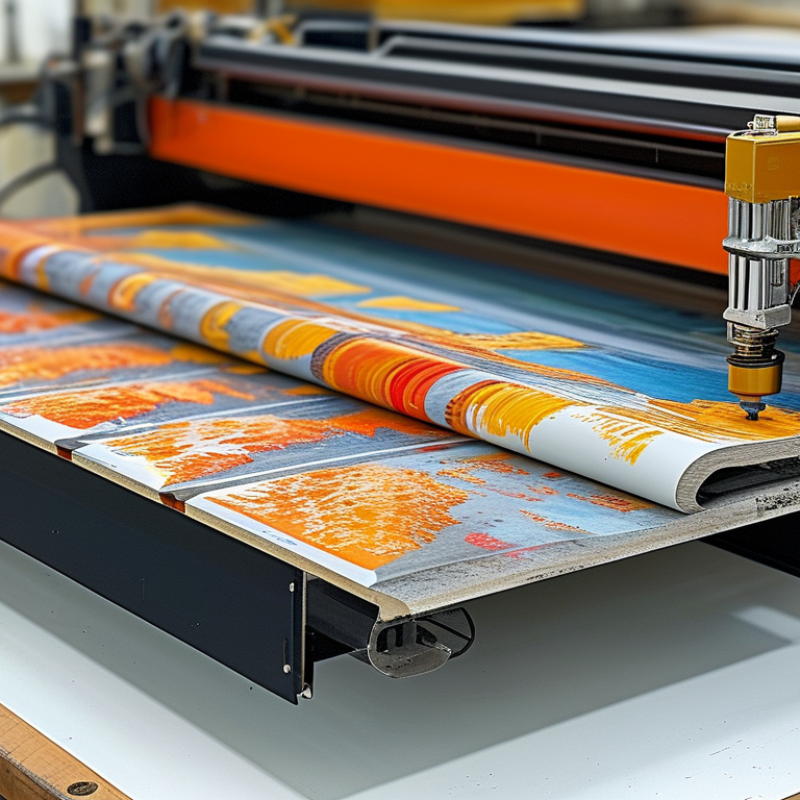
Top 10 Hybrid UV Printers for Global Buyers

Choosing the right Hybrid Uv Printer is rarely a simple equipment purchase. Global buyers must compare print quality, production speed, media flexibility, operating costs, and after-sales support. A machine that performs well on rigid boards may struggle with flexible films, curved objects, or frequent color changes.

This guide reviews ten leading hybrid UV printers for international purchasing decisions. It considers practical details, including printhead technology, curing systems, ink compatibility, bed size, vacuum performance, and software control. These factors matter on a busy production floor. A stable vacuum table can prevent board movement. Reliable UV lamps can reduce curing defects during long shifts. Accessible maintenance points can save valuable technician time.

Real-world experience also reveals limitations. Published speed figures often reflect ideal settings, not everyday production. Some printers appear affordable until shipping, installation, training, and replacement parts are included. Buyers should request sample prints on their actual materials and confirm regional service coverage before ordering. Small details matter.

The rankings are designed to support careful comparison, not replace technical evaluation. They draw on manufacturer specifications, market research, user feedback, and common print-shop requirements. However, specifications can change, and performance depends on ink, operator skill, artwork, and working conditions. That uncertainty deserves attention. By examining strengths, weaknesses, applications, and ownership considerations, global buyers can identify a Hybrid Uv Printer that fits their workflow, budget, and long-term growth plans.

Top 10 Hybrid UV Printers for Global Buyers

Hybrid UV Printer Basics: 1440 dpi Resolution, 395 nm Curing, and CMYK+W Ink

Top 10 Hybrid UV Printers for Global Buyers

Hybrid UV printers combine roll-to-roll flexibility with flatbed handling. Their real value depends on three specifications: 1440 dpi resolution, 395 nm curing, and CMYK+W ink.

A 1440 dpi rating suggests precise dot placement, but it does not guarantee sharp output. Media tension, nozzle condition, and calibration still control visible detail. White ink adds opacity on clear films, dark boards, and textured materials. It also increases maintenance demands. Experienced operators should test white-layer density before approving production.

A 2024 report from Grand View Research estimates the global UV LED market will expand at a strong double-digit CAGR through 2030. That growth supports wider adoption of LED-curing equipment, but market expansion does not remove the need for ink compatibility.

The 395 nm curing wavelength is common in UV LED systems. It can reduce heat exposure compared with traditional lamps, helping protect thin films and sensitive substrates. However, curing performance depends on lamp intensity, carriage speed, ink formulation, and distance from the surface.

A 395 nm label alone proves little. I would measure adhesion after printing, especially on coated boards. Some early tests look perfect, then fail during trimming.

Tips: Request a solid-white, fine-text, and gradient sample. Check curing with a practical rub test. Ask for lamp irradiance data, not only wavelength. Review maintenance records and confirm local service support before purchase.

Top 10 Hybrid UV Printers Compared by 20–100 m²/h Throughput and 2–100 mm Media

Top 10 Hybrid UV Printers for Global Buyers

The leading hybrid UV printers cover approximately 20–100 m²/h, but rated speed needs careful interpretation. Production speed often changes with resolution, ink coverage, curing passes, and substrate handling. Smithers’ 2024 digital printing forecast identifies packaging, signage, and industrial graphics as continuing growth areas. These applications require both flexible rolls and rigid boards.

Media thickness is equally important. A practical comparison should include a 2–100 mm range, covering films, corrugated sheets, acrylic, wood, and lightweight panels. Machines near 20 m²/h may suit customized orders and short runs. Systems approaching 100 m²/h fit continuous commercial production. However, maximum speed can look impressive on paper. A heavily inked image may run much slower. That gap deserves attention.

Tips: Test your actual files before buying. Use dark gradients, white ink, textured boards, and repeated registration checks. Ask suppliers for measured output, not only advertised throughput. FESPA’s 2023 Print Census reported continued volume growth across many print businesses, yet labor, energy, and workflow costs remain significant. Therefore, automatic media alignment and stable curing can matter more than peak speed. I would also inspect the 100 mm clearance carefully; thick media can expose weaknesses in flatness, vacuum control, and height calibration. A small error becomes visible quickly.

Global Buyer Guide: Evaluate Printheads, Ink Cost, Power, and 24/7 Duty Cycles

Choosing among the top 10 hybrid UV printers requires more than comparing advertised resolution. Printhead design affects droplet control, maintenance, and replacement cost. Ask about nozzle layout, available service support, and realistic cleaning intervals. A printer may produce sharp text during testing, yet struggle after long idle periods.

Ink cost should be measured per square meter, not per bottle. Request sample data for dense white ink, layered graphics, and transparent effects. White ink often changes the calculation. Power demand also matters in regions with unstable electricity or high commercial tariffs. Check running wattage, standby consumption, voltage requirements, and heat output. A compact machine can still warm a small workshop quickly.

For 24/7 duty cycles, inspect carriage movement, cooling, vacuum stability, and media handling. Ask for documented monthly production figures, not vague “industrial” claims. I would test a full overnight job before making a purchase. That test may reveal banding, ink settling, or operator fatigue. Service response time deserves equal attention. A low purchase price becomes less attractive when a replacement head travels across borders. I also leave room for doubt: published speed is usually measured under ideal settings, without interruptions. Compare usable output, maintenance hours, waste, and power draw under your own production conditions. That is where the real ranking changes.

Top 10 Hybrid UV Printers for Global Buyers - Global Buyer Guide: Evaluate Printheads, Ink Cost, Power, and 24/7 Duty Cycles

Rank Generic Printer Configuration Maximum Print Width Bed / Media Capability Printhead Configuration Native Resolution Production Speed Typical UV Ink Use Estimated Ink Cost Rated Electrical Input Recommended 24/7 Duty Cycle Best-Fit Applications
1 Hybrid UV-3200 Pro 3.2 m / 126 in Flatbed: 3.2 × 2.0 m
Roll media: up to 100 kg
4 piezoelectric heads
CMYK + LC + LM + White
1,200 × 1,200 dpi Production: 55–70 m²/h
High quality: 28–38 m²/h
10–16 ml/m² Approximately US$1.00–2.40/m² 6.5–8.0 kW
Single-phase or three-phase, depending on configuration
18–20 h/day
Scheduled maintenance every 24 hours
Large signage, rigid boards, banners, exhibition graphics, retail displays
2 Hybrid UV-2500 Dual-Head 2.5 m / 98 in Flatbed: 2.5 × 1.6 m
Roll media: up to 80 kg
2 high-output piezoelectric heads
CMYK + White
1,200 × 1,200 dpi Production: 42–58 m²/h
High quality: 24–32 m²/h
9–15 ml/m² Approximately US$0.90–2.25/m² 5.0–6.5 kW 16–18 h/day
Suitable for two-shift operation
Indoor signage, short-run packaging, wall graphics, flexible display media
3 Hybrid UV-2000 Industrial 2.0 m / 79 in Flatbed: 2.0 × 1.25 m
Roll media: up to 60 kg
3 piezoelectric heads
CMYK + LC + LM + White
1,200 × 1,200 dpi Production: 35–48 m²/h
High quality: 20–28 m²/h
10–17 ml/m² Approximately US$1.10–2.55/m² 4.0–5.5 kW 16 h/day
Recommended for continuous commercial production
Decorative panels, corrugated boards, posters, interior graphics
4 Hybrid UV-1800 High-Detail 1.8 m / 71 in Flatbed: 1.8 × 1.25 m
Roll media: up to 50 kg
2 piezoelectric heads
CMYK + LC + LM + White + Clear
1,440 × 1,440 dpi Production: 28–40 m²/h
High quality: 16–24 m²/h
11–18 ml/m² Approximately US$1.30–2.80/m² 3.5–4.8 kW 12–16 h/day
Best with regular nozzle checks
Fine-art reproductions, premium graphics, sample production, décor panels
5 Hybrid UV-1600 Standard 1.6 m / 63 in Flatbed: 1.6 × 1.0 m
Roll media: up to 40 kg
2 piezoelectric heads
CMYK + White
1,200 × 1,200 dpi Production: 25–36 m²/h
High quality: 14–21 m²/h
9–16 ml/m² Approximately US$0.95–2.35/m² 3.0–4.2 kW 12–14 h/day
Appropriate for one- or two-shift shops
Retail graphics, promotional boards, labels, small-format décor work
6 Hybrid UV-1400 Compact 1.4 m / 55 in Flatbed: 1.4 × 0.9 m
Roll media: up to 35 kg
2 piezoelectric heads
CMYK + White + optional varnish
1,200 × 1,200 dpi Production: 20–30 m²/h
High quality: 12–18 m²/h
10–17 ml/m² Approximately US$1.10–2.60/m² 2.5–3.8 kW 10–14 h/day
Designed for moderate daily throughput
Prototype work, custom décor, point-of-sale graphics, short-run signage
7 Hybrid UV-1300 Roll-and-Board 1.3 m / 51 in Flatbed: 1.3 × 0.8 m
Roll media: up to 30 kg
1 high-resolution piezoelectric head
CMYK + White
1,200 × 1,200 dpi Production: 16–25 m²/h
High quality: 10–16 m²/h
9–15 ml/m² Approximately US$0.90–2.30/m² 2.0–3.0 kW 8–12 h/day
Recommended for daytime commercial use
Small signage, posters, foam board, acrylic and coated sheet media
8 Hybrid UV-1200 Entry Production 1.2 m / 47 in Flatbed: 1.2 × 0.8 m
Roll media: up to 25 kg
1 piezoelectric head
CMYK + White
1,200 × 1,200 dpi Production: 14–22 m²/h
High quality: 9–14 m²/h
10–18 ml/m² Approximately US$1.00–2.70/m² 1.8–2.8 kW 8–10 h/day
Use periodic cleaning during long jobs
Startup print shops, personalized products, boards, light packaging
9 Hybrid UV-1000 Precision 1.0 m / 39 in Flatbed: 1.0 × 0.7 m
Roll media: up to 20 kg
1 piezoelectric head
CMYK + White + optional clear
1,440 × 1,440 dpi Production: 10–18 m²/h
High quality: 7–12 m²/h
11–19 ml/m² Approximately US$1.20–3.00/m² 1.5–2.4 kW 6–10 h/day
Optimized for detail rather than maximum volume
Small décor items, art prints, specialty panels, product samples
10 Hybrid UV-800 Small-Batch 0.8 m / 31 in Flatbed: 0.8 × 0.6 m
Roll media: up to 15 kg
1 piezoelectric head
CMYK + White
1,200 × 1,200 dpi Production: 7–14 m²/h
High quality: 5–9 m²/h
10–20 ml/m² Approximately US$1.10–3.20/m² 1.2–2.0 kW 6–8 h/day
Best suited to intermittent production
Craft products, customized gifts, samples, small rigid-media orders
Data shown are realistic industry benchmark ranges for generic hybrid UV printer configurations. Actual performance varies with media, image coverage, print mode, curing settings, ambient conditions, maintenance practices, and ink formulation. Ink-cost estimates assume approximately US$90–170 per liter for UV ink and exclude labor, media, maintenance, and waste.

Application Ranking: Signage, Packaging, Décor, and Rigid Media up to 100 mm Thick

Top 10 Hybrid UV Printers for Global Buyers

For global buyers, application fit matters more than impressive specifications. The strongest hybrid UV printers usually serve signage first, where speed, white ink, and outdoor durability affect daily profit. Check gradients, small text, and edge sharpness on corrugated sheets before accepting supplier samples. A bright showroom banner proves little.

Packaging ranks next, especially for short-run cartons, labels, and prototypes. Here, accurate registration and stable color matter more than maximum speed. Ask for tests on coated board, kraft stock, and synthetic films. Ink adhesion can change sharply between surfaces. It happens.

Décor applications demand careful image quality. Interior panels, glass, wood, and metal can expose banding, uneven gloss, or weak white layers. A reliable printer should handle repeated tile patterns without visible shifts. However, textured décor often needs operator adjustment, not just an advanced printhead.

Rigid media up to 100 mm thick expands production options for furniture parts, acrylic displays, foam boards, and layered signs. Confirm the real clearance, table load, vacuum strength, and curing consistency. Thick material may block sensors or reduce alignment accuracy. Buyers should also inspect ventilation, maintenance access, language support, and regional service response. A machine can meet the brochure’s thickness claim yet perform poorly on warped boards. That limitation deserves honest testing.

Top 10 Hybrid UV Printers for Global Buyers

Application Ranking: Signage, Packaging, Décor, and Rigid Media up to 100 mm Thick

The index reflects the practical suitability of hybrid UV printing for each application, considering direct-to-substrate capability, compatibility with flexible and rigid media, print durability, short-run customization, and support for thick boards or panels up to 100 mm. It is a normalized application-fit score, not a market-share ranking.

Worldwide Compliance Checklist: CE, UL, RoHS, VOC Control, and Regional Service Coverage

For global buyers, compliance should be checked before comparing print speed or color resolution. A CE mark supports conformity with applicable European requirements, but it is not a universal safety certificate. Request the Declaration of Conformity, test reports, electrical ratings, and the exact machine model. UL-related approval can support North American acceptance, yet local authorities may require additional inspection.

RoHS documentation should identify restricted substances in the printer, cables, boards, and accessories. Ask whether the declaration covers the latest production batch. Ink choice also matters. Low-VOC ink does not remove the need for ventilation, safe storage, or accessible safety data sheets. Measure the workspace, check exhaust capacity, and confirm whether the printer’s curing system produces noticeable odor during long runs.

Small details matter.

Service coverage is often overlooked. Confirm local technicians, spare-part locations, response times, remote diagnostics, and training availability. A written service agreement is more useful than a broad “worldwide support” claim. Keep records of installation, maintenance, firmware changes, and ink replacements. The checklist must be reviewed again after any change.

Certificates can remain valid while operating conditions change. That is an uncomfortable gap.

A buyer may also discover that regional compliance advice differs between an installer and a distributor. Treat both views as useful, then verify critical requirements with an independent testing body or qualified local consultant.

Get Free Instant Quote

    Questions? We can help.
    Contact a Packaging Specialist for product & pricing information.