10 Tips for Buying Disposable Paper Cups
Buying Disposable Paper Cups seems simple until a rushed order arrives with weak rims, leaking seams, or the wrong size. A cup that looks sturdy online may soften after ten minutes beside a hot coffee machine. Material choice matters. So do lid fit, insulation, print quality, and storage conditions.
This guide presents 10 practical tips for choosing Disposable Paper Cups with greater confidence. It considers beverage temperature, cup volume, paper thickness, coating type, and supplier consistency. Real purchasing experience shows that the cheapest carton is rarely the cheapest solution. A small leak can stain a counter, delay service, and damage customer trust. Test samples before ordering in bulk. Hold each cup filled with hot water. Check the rim, base, and sleeve while the cup remains warm.
Details matter.
Reliable suppliers should provide clear product specifications, food-contact information, and consistent batch quality. Certifications can support trust, but they should be checked rather than assumed. Ask about packaging, storage life, minimum order quantities, and replacement policies. A supplier’s quick reply is useful, though it does not prove manufacturing quality. I have also found that attractive branding can distract from poor usability. That is an easy mistake to make.
The following tips help cafés, offices, events, and retailers compare options more carefully. They are practical rather than absolute because every service setting has different demands. A busy takeaway counter needs speed. A quiet office may value comfort and recycling guidance more. Choose with evidence, not appearance alone.
Understanding Disposable Paper Cup Materials and Construction
10 Tips for Buying Disposable Paper Cups
Understanding construction matters more than a glossy surface. Most paper cups use paperboard with a thin polyethylene or water-based barrier. This layer prevents leaks and protects the drink from direct paper contact. The rim is rolled for stiffness, while the base is sealed through a separate paper disc. Grand View Research valued the global paper cup market at about USD 11.5 billion in 2022. Its report also forecasts steady growth through 2030. That growth increases the need for measurable quality, not vague “eco” claims.
Tip 1: Ask for paperboard weight, coating type, and food-contact test records.
Tip 2: Check the bottom seam with warm liquid before large-volume purchasing.
Cup performance depends on temperature, filling speed, and handling. A single-wall cup suits many cold drinks, but hot beverages may require double-wall construction. Air gaps improve hand comfort without adding a second sleeve. Smithers’ Future of Paper Cups to 2028 highlights barrier technology and fiber efficiency as key development areas. However, lightweighting can reduce stiffness when the rim or base is poorly formed. I have seen a cup look strong, then soften around the seam within minutes. That small failure wastes product and damages customer trust.
Tip 3: Test filled cups for at least 30 minutes.
Tip 4: Request independent migration and leakage results.
EPA data reports a 40.4% recycling rate for paper and paperboard packaging in 2022, but this figure does not represent cups alone. Local recovery systems still vary. That detail deserves honest checking.
Choosing the Right Cup Size, Shape, and Capacity
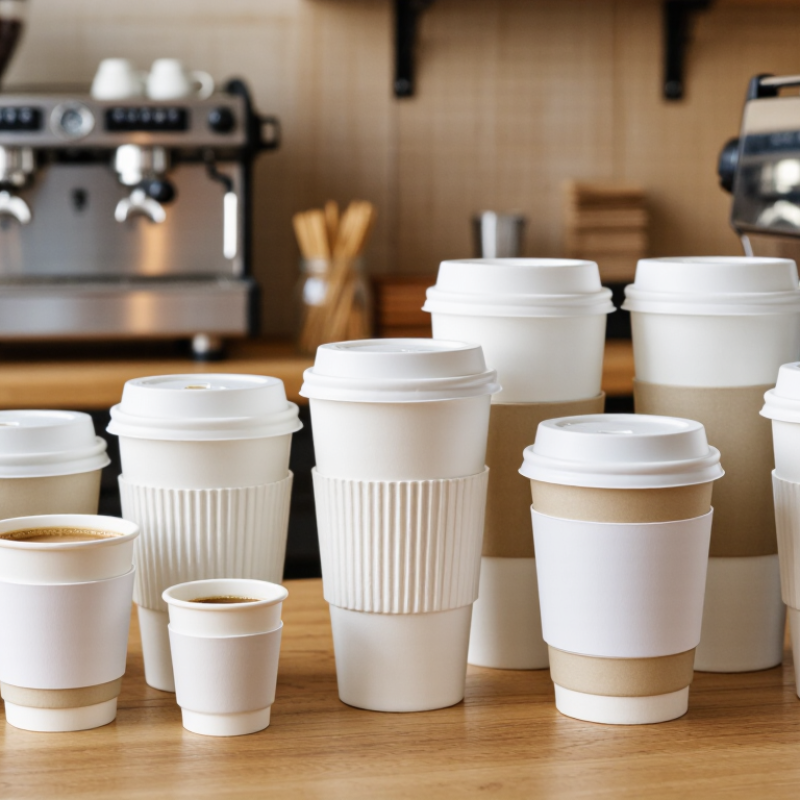
Choosing the right disposable paper cup starts with the drink, not the design. The National Coffee Association’s 2024 National Coffee Data Trends report found that 67% of American adults drank coffee in the past day. That demand makes capacity planning important. Use 4–6 oz cups for tastings, 8 oz for short coffees, and 12–16 oz for regular takeaway drinks. Larger cups need stronger sidewalls and better lids.
- Measure the filled drink, including ice.
- Leave room for foam.
- Match the lid diameter carefully.
- Choose a narrow shape for better grip.
- Select a wider base for blended drinks.
- Check whether the cup fits standard holders.
- Test stacking before ordering.
- Compare rim strength by hand.
- Confirm hot-drink insulation.
- Order samples first.
The Foodservice Packaging Institute identifies cup performance, functionality, and material efficiency as key purchasing considerations. A 16 oz cup can look generous, but it may waste product when filled with only 10 oz. That mistake is common. It also increases storage needs. For hot beverages, double-wall or corrugated designs can reduce the need for an extra sleeve. For cold drinks, a wider opening suits ice and toppings, while a tighter rim helps control spills. Test each size with real beverages for at least one service period. Staff feedback often reveals problems that specifications miss.
Comparing Linings, Insulation, and Leak Resistance
10 Tips for Buying Disposable Paper Cups
Comparing Linings, Insulation, and Leak Resistance
Buying disposable paper cups requires more than checking thickness or price. Your coffee may look harmless, but heat can expose weak materials quickly. The lining controls moisture, strength, and the cup’s contact with beverages. Common options include plastic-based coatings, water-based barriers, and compostable films. Each behaves differently with hot drinks, cold liquids, and acidic beverages. Ask for food-contact documentation and performance details from the supplier. A vague claim is not enough.
A thicker wall does not always mean better insulation. Air space between layers often reduces heat transfer more effectively. Double-wall cups can protect hands without requiring an extra sleeve. However, some designs feel unstable when filled near the rim. I once tested a seemingly sturdy cup that softened after twenty minutes. That result changed my buying checklist. Insulation needs real-use testing, not only a product description.
Leak resistance depends on the lining, rim curl, and bottom seam. Examine the base carefully. Small gaps can cause slow drips. Fill each sample with hot and cold liquids, then place it on a dry napkin. Tap the side gently and watch for spreading moisture. Repeat the test after fifteen minutes. A cup that passes immediately may still fail during transport. Also check whether the lid fits tightly without crushing the rim. I still find this step easy to overlook, especially when samples arrive neatly packed.
10 Tips for Buying Disposable Paper Cups: Linings, Insulation, and Leak Resistance
This chart compares typical performance characteristics of common paper-cup lining types. Ratings use a 1–5 scale, where 5 indicates stronger overall performance. Actual results vary with paper thickness, coating weight, cup design, sealing quality, and beverage temperature.
Polyethylene linings generally provide reliable moisture and leak resistance. PLA linings can offer comparable liquid resistance while supporting industrial compostability where suitable facilities exist. Water-based dispersion coatings avoid a conventional plastic film but may require careful selection for hot, oily, or extended-use applications. For hot drinks, also evaluate double-wall or corrugated insulation rather than relying on the lining alone.
Evaluating Suppliers, Costs, Packaging, and Order Quantities
10 Tips for Buying Disposable Paper Cups
Choosing a paper cup supplier requires more than comparing the lowest unit price. Ask for food-contact test reports, material specifications, and production samples. A reliable supplier should explain coating materials, printing methods, quality controls, and traceability. Request a written quotation with currency, delivery terms, payment conditions, and estimated production time. Clear documents reduce unpleasant surprises.
Calculate the full cost, not only the cup price. Include printing setup, cartons, pallets, freight, customs charges, storage, and possible defects. A cheaper cup may use thinner paper and deform near hot drinks. Check sample performance with your actual beverage temperature and filling process. Small tests matter. I once focused too heavily on unit cost and underestimated warehouse fees. That decision looked efficient, but it weakened the final margin.
Packaging should protect the rims from dust, moisture, and crushing during transport. Confirm the number of sleeves per carton and cartons per pallet. Measure your storage space before ordering. Order quantities also need careful judgment. Large volumes may reduce prices, but they can create obsolete stock, especially after seasonal design changes. Ask about minimum order quantities and whether mixed sizes are possible. For a new supplier, a smaller trial order can reveal consistency, packing accuracy, and delivery reliability. It may cost more per cup, yet the learning value is real. Recheck the numbers after every shipment. Suppliers can improve, but buyers must verify.