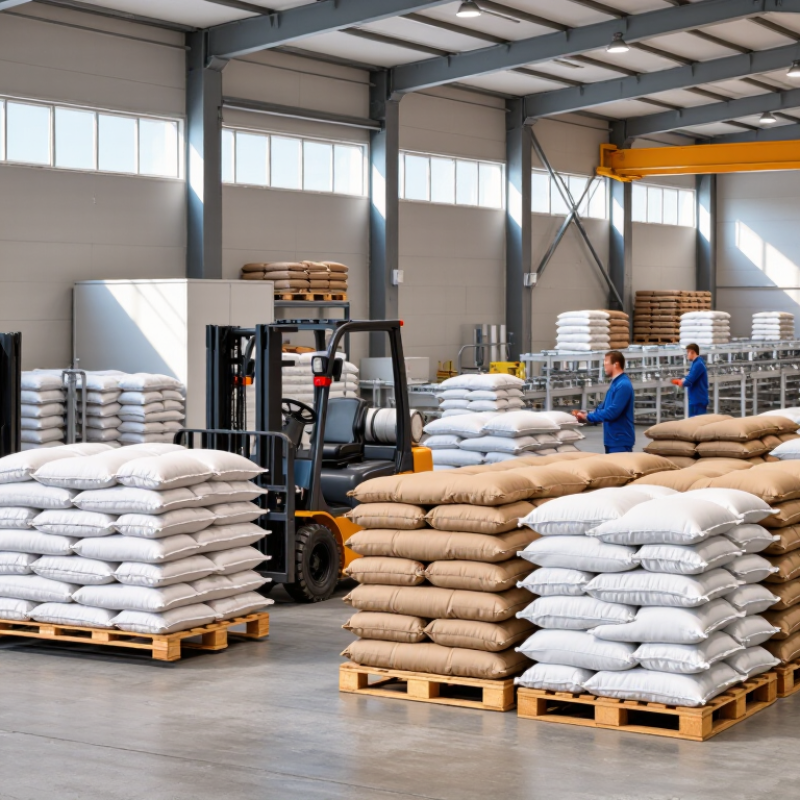
A curated selection of packaging products that fly off our shelves. Our customers love these bestsellers for their practicality and visual appeal, ensuring your products stand out and attract more buyers.
Choosing the right China Best Mineral Bags Supplier requires more than comparing prices. Global buyers need dependable packaging, clear specifications, and evidence of consistent production. Mineral bags must protect materials from moisture, tearing, contamination, and rough handling during storage or transport.
An experienced Mineral Bags Supplier should understand different mineral products and their packaging demands. Calcium carbonate, silica sand, bentonite, and other powders may require different bag structures, liners, closures, and weight capacities. A practical supplier can recommend woven polypropylene, kraft paper, laminated designs, or custom inner films based on actual use. Details matter. A strong bag should maintain its shape when stacked, resist seam failure, and remain easy to fill and unload.
Reliable cooperation also depends on transparent communication. Buyers should review factory experience, material testing, sample results, production capacity, and quality-control records. Independent inspections can add confidence before larger orders. Some suppliers may present attractive samples but perform differently in mass production. That risk deserves attention. Production schedules, packaging marks, pallet methods, and export documents should be confirmed in writing. Small misunderstandings can create expensive delays.
The best supplier is not always the cheapest option. It is the partner that balances durability, customization, service, and stable delivery. Still, no supplier is perfect. Buyers should ask direct questions, test samples under realistic conditions, and record any weakness before approval. With careful evaluation, global importers can build a safer and more efficient supply chain for mineral packaging.
Mineral packaging must match the material, filling method, and transport route. PP woven sacks suit smaller quantities, such as 25 or 50 kg of powder or granules. Their woven structure provides practical tear resistance during loading and stacking. Lamination can improve moisture protection, but it may reduce breathability. The right balance depends on the mineral’s moisture sensitivity.
FIBCs support heavier loads, commonly from 500 to 2,000 kg. Their lifting loops, seams, discharge spouts, and fabric weight require careful specification. A supplier should confirm the safe working load, safety factor, filling system, and unloading method before production. Weight matters. A bag designed for 1,000 kg should not casually carry 1,500 kg. Load testing, seam checks, and dimensional inspections provide stronger evidence than photographs.
For global buyers, reliable sourcing includes clear drawings, sample approval, batch records, and consistent communication. Ask for fabric details, liner options, UV requirements, and pallet instructions. Mineral dust can enter weak stitching or poorly fitted liners. Small defects become expensive at the warehouse. A clean sample can still hide production variation, so repeat inspections are worth considering. Specifications are sometimes incomplete, and that is where mistakes begin. Good suppliers raise questions instead of guessing. Their experience should appear in measured test data, practical recommendations, and stable quality across repeated shipments.
For mineral bags, polypropylene fabric must balance strength, flexibility, and handling comfort. PP strength helps the bag resist tearing during filling, stacking, and transport. We assess fabric weight, tensile results, seam construction, and handle performance. A filled sack should hold its shape without excessive stretching. In practice, seam quality can matter as much as fabric strength. This is often overlooked.
Sunlight can weaken untreated polypropylene during outdoor storage. UV-resistant additives slow this damage and support longer service life. However, no additive makes a bag permanently weatherproof. We recommend exposure testing that reflects the buyer’s climate and storage period. A covered warehouse still needs sensible protection. Small storage mistakes can reduce reliable performance.
The liner range from 40 to 60 μm supports different moisture and containment needs. A 40 μm liner may suit dry minerals and shorter handling cycles. A 60 μm liner offers extra puncture resistance for rough loading conditions. We check liner sealing, thickness consistency, and fit inside the woven bag. Thicker is not always better. It can raise weight, cost, and folding difficulty. Our recommendation starts with the material, filling method, and transport route. Yet field conditions sometimes challenge the original specification, so periodic inspection remains necessary.
China Best Mineral Bags Supplier for Global Buyers
Safety Standards: ISO 21898 FIBCs, UN Certification, and SWL Testing
Mineral products can place heavy demands on flexible intermediate bulk containers. Sharp particles may stress fabric, while moisture can weaken stored material. An experienced supplier should select woven polypropylene, liner options, and discharge designs according to the product and handling method. ISO 21898 provides a practical framework for FIBC construction, performance, marking, and testing. It is not merely a label.
UN certification matters when the filled material is classified for regulated transport. The certificate must match the FIBC design, filling method, closure system, and approved packing group. Buyers should check the certificate number, test records, production date, and traceability documents. A certificate from an unrelated bag design creates risk. Small details matter.
Safe Working Load, or SWL, should reflect real lifting conditions. Testing may include top-lift performance, drop resistance, stacking stability, and seam strength. A bag rated for one tonne still requires correct forks, hooks, storage height, and lifting procedures. Never exceed the marked SWL. Never reuse a bag without approval.
We inspect seams and lifting loops before shipment. Yet inspection is not perfect. Human handling can damage a sound bag within minutes. Buyers should review loading photos, sampling plans, and warehouse conditions. Clear records help identify weak points. Better questions often prevent expensive failures.
Selecting a mineral bag supplier requires more than checking a low quotation. ISO 21898 sets performance requirements for flexible intermediate bulk containers, including construction, testing, and safe handling. A reliable supplier should provide material certificates, seam inspection records, and traceable batch numbers. Small details matter. A loose corner can cause costly leakage.
Batch testing should follow a written sampling plan. Inspectors can check fabric weight, tensile strength, stitching, coating adhesion, and load performance. Testing every production batch creates stronger evidence than relying on one annual certificate. The World Bank’s 2023 Logistics Performance Index identifies tracking and timeliness as key logistics capabilities. Buyers should therefore review shipment records, not promises. A practical benchmark is 95% or higher on-time delivery, measured against confirmed shipping dates.
Factory audits should include random bag selection from finished pallets. Photograph labels, seams, and inner liners before loading. Check whether the tested sample matches the delivered material. This step is often skipped. It should not be. UNCTAD reports that maritime transport carries over 80% of global merchandise trade by volume, making port delays a real supply risk. Suppliers should maintain backup production slots and share delay alerts quickly. No system is perfect, and even strong suppliers may miss targets during peak seasons. The important question is whether they measure failures, investigate causes, and improve the next batch.
China Best Mineral Bags Supplier for Global Buyers
Container planning starts with the bag specification, not a shipping quote. A 20-foot container often offers about 33 cubic meters, while a 40-foot unit offers about 67 cubic meters. Usable space falls after pallets, liners, and protective materials. Weight may limit loading before volume does. For a first order, 5,000 to 10,000 bags can provide a practical trial range, but this is supplier practice, not a universal standard. Request a loading plan before confirming the MOQ. It should show bag size, pallet count, gross weight, and estimated container utilization.
Incoterms must match your actual purchasing capability. Under FOB, the buyer usually controls the main ocean freight. Under CIF, the seller arranges freight and basic insurance, but risk transfers earlier than many new buyers expect. DAP may simplify delivery, yet import clearance and local taxes usually remain with the buyer. UNCTAD’s Review of Maritime Transport 2024 recorded 2.4% growth in global maritime trade during 2023, showing why freight planning remains sensitive to capacity and route changes. Rates can move quickly.
Prepare commercial invoices, packing lists, bills of lading, certificates of origin, and inspection records. Packaging specifications should match the invoice and customs declaration. The World Bank’s Logistics Performance Index 2023 assessed 139 economies and highlighted customs, tracking, and timeliness as core logistics factors. A missed document can delay a correctly packed shipment. I have seen procurement plans focus heavily on unit price. That is understandable, but incomplete. Supplier quality checks, moisture protection, and document review deserve equal attention.
| Procurement Dimension | Typical Specification or Range | Common Mineral-Bag Application | Buyer Verification Point | Export or Logistics Note |
|---|---|---|---|---|
| Bag Type | PP woven sacks, valve sacks, open-mouth sacks, and FIBCs (bulk bags) | Cement, limestone powder, gypsum, silica sand, bentonite, talc, and other dry mineral products | Confirm filling method, discharge method, liner requirement, and whether the material is powdery or granular | FIBCs are generally selected for bulk handling; smaller woven sacks are commonly used for retail or palletized shipments |
| Typical MOQ | Approximately 5,000–10,000 pieces for standard woven sacks; about 500–1,000 pieces for standard FIBCs | Standard sizes, standard fabric, and commonly available colors | MOQ can increase for custom printing, special coatings, liners, food-contact requirements, or unusual dimensions | Request a written MOQ by size, construction, printing, and packaging method before placing an order |
| FIBC Working Load | Common safe working loads are 500 kg, 1,000 kg, 1,250 kg, and 1,500 kg | Bulk minerals, powders, aggregates, and industrial raw materials | Check SWL, safety factor, lifting-loop design, filling system, and discharge outlet specifications | SWL must match the product weight and handling equipment; do not treat test capacity as a permitted working load |
| Typical FIBC Dimensions | Common base sizes include approximately 90 × 90 cm and 95 × 95 cm; height is often 90–120 cm | One-ton bulk bags and pallet-compatible mineral packaging | Confirm filled dimensions, pallet footprint, forklift clearance, and container loading pattern | Actual filled dimensions vary with product density, bag construction, and filling process |
| Fabric and Coating | Polypropylene woven fabric, commonly uncoated or coated; fabric weight often selected around 80–220 g/m² depending on design | Standard minerals, fine powders, moisture-sensitive products, and abrasive materials | Verify tensile strength, seam strength, lamination, UV treatment, and resistance to dust leakage | Coated fabric or an inner liner can improve moisture and fine-powder control but may affect cost and lead time |
| Inner Liner Options | Loose liner, form-fit liner, or attached liner made from polyethylene film | Fine powders such as cement, lime, silica, and mineral fillers | Specify film thickness, liner attachment, filling temperature, and required dust-tightness | Polyethylene liners help reduce contamination and leakage but are not automatically suitable for every regulated product |
| Printing | Flexographic printing is commonly used for woven PP bags; one to four colors is typical for standard industrial packaging | Product identification, handling instructions, batch information, and regulatory markings | Approve artwork, print position, ink color, language, and barcode readability before mass production | Printing plates, color changes, and small production runs may add setup charges or extend production time |
| 20-Foot Container Capacity | Approximately 10,000–18,000 standard empty woven sacks, or about 500–900 empty FIBCs | Containerized export of empty packaging | Capacity depends on folded dimensions, bale compression, bag weight, pallet use, and maximum payload | Confirm the final loading plan because cubic volume and container payload may limit the actual quantity |
| 40-Foot High-Cube Capacity | Approximately 22,000–40,000 standard empty woven sacks, or about 1,000–2,000 empty FIBCs | Large-volume procurement of empty mineral bags | Request a packing list showing bale dimensions, gross weight, net weight, and total cubic volume | High-cube containers offer more internal volume, but the permissible gross cargo weight still depends on route and carrier rules |
| Common Incoterms | EXW, FOB, CFR, CIF, FCA, and DAP are frequently considered for international purchases | Supplier pickup, port shipment, or delivered-to-site procurement | Specify the named place or port and the applicable Incoterms® version, preferably Incoterms® 2020 | Under FOB and CFR/CIF, clarify the export port, ocean freight scope, insurance responsibility, and destination charges |
| Recommended Incoterm by Situation | FOB for buyers managing ocean freight; CIF for buyers needing freight and basic insurance included; DAP for site delivery coordination | Regular container imports and buyers with different levels of logistics experience | Compare the total landed cost rather than only the unit price | Import duties, VAT, customs clearance, unloading, storage, and last-mile delivery may remain outside the quoted price |
| Commercial Invoice | Usually includes seller and buyer details, product description, quantity, unit price, currency, Incoterm, and total value | Customs valuation and payment documentation | Ensure the product description and value match the purchase order, packing list, and shipping data | Use the importer’s legal name and tax or registration information where required by the destination country |
| Packing List | Typically states package count, bag quantity, bale or pallet dimensions, net weight, gross weight, and marks | Customs inspection, warehouse receiving, and container unloading | Check that quantities and weights reconcile with the commercial invoice and bill of lading | Accurate packing data supports freight booking, customs filing, and destination handling arrangements |
| Bill of Lading | Ocean transport document showing shipper, consignee, notify party, port of loading, destination, and cargo details | Release and transport of containerized shipments | Confirm consignee wording, destination port, container number, seal number, and freight terms before issuance | Original, telex release, or sea waybill arrangements should be agreed with the buyer, carrier, and bank when applicable |
| Certificate of Origin | May be issued or certified according to the requirements of the importing country | Customs origin verification and possible preferential tariff claims | Confirm whether a standard or preferential certificate is required before shipment | Origin rules and required issuing authorities vary by destination and trade agreement |
| Quality Documents | Common documents include a product specification sheet, inspection report, test report, and material declaration | Technical approval and incoming quality control | Define sampling method, test standards, acceptance criteria, and corrective-action process in the purchase contract | For special applications, request evidence for tensile strength, seam strength, UV resistance, dust leakage, or food-contact compliance as applicable |
| Container and Cargo Safety | Dry, clean, odor-free container; properly compressed and secured bales; moisture protection where needed | Long-distance transport of empty PP woven bags and FIBCs | Inspect container condition, loading photos, seal number, and moisture-prevention measures | Empty PP packaging is generally non-dangerous cargo, but the final classification depends on the goods and destination regulations |
| Lead-Time Planning | Allow time for artwork approval, sampling, production, inspection, stuffing, and ocean transit | First orders, repeat orders, and seasonal procurement | Separate production lead time from port transit time and customs clearance time | Custom printing, liners, special fabric, peak seasons, and port congestion can extend the overall schedule |
Note: Quantities, capacities, specifications, and document requirements are typical planning references. Final values should be confirmed against the approved bag drawing, purchase contract, carrier instructions, customs rules, and destination-country regulations.