2026 Top Intelligent Warehousing Systems Trends for Global Buyers?
As we navigate the complexities of 2026, Intelligent Warehousing Systems are set to transform the supply chain landscape. Industry expert Dr. Emily Chen asserts, "The future of warehousing lies in intelligent systems that adapt to market needs." Her insight highlights a pivotal shift in how warehouses operate.
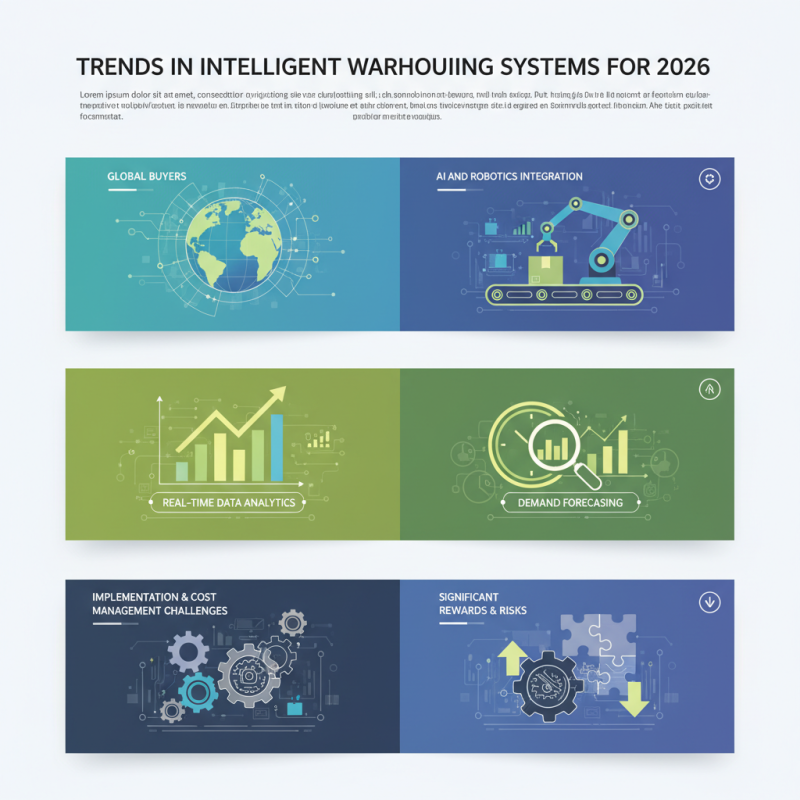
The integration of AI and robotics in intelligent warehousing is crucial. These systems enhance efficiency and reduce operational costs. However, challenges remain. Many businesses struggle with implementation and cost management. Understanding the nuances of these systems becomes vital for global buyers.
In this evolving environment, real-time data analytics will play a key role. Intelligent Warehousing Systems can forecast demand and optimize inventory. Buyers must remain vigilant to keep pace. The potential rewards are significant, but they come with risks. Adapting to this new era requires thoughtful consideration and investment.
Emerging Technologies Shaping Intelligent Warehousing in 2026
Emerging technologies are transforming intelligent warehousing dramatically. By 2026, data from industry reports suggests that up to 75% of warehouses will utilize automation. Robotics will streamline operations, allowing for faster processing and higher accuracy in order fulfillment. Automated guided vehicles (AGVs) are expected to become common, reducing labor costs and increasing throughput.
Smart sensors and IoT devices will further enhance warehousing. These technologies can provide real-time tracking of inventory levels. In fact, a study by McKinsey indicates that companies leveraging IoT in warehousing can see efficiency gains of 20-30%. However, deploying these systems requires careful consideration. Integration challenges, data security concerns, and the need for upskilling the workforce may pose risks.
Artificial Intelligence (AI) is another game-changer, optimizing inventory management and predicting demand trends accurately. Research from Gartner predicts that AI will drive a 50% reduction in inventory holding costs for industries that adopt it. Yet, relying solely on AI without human oversight can lead to errors. The balance between advanced technology and human judgment is crucial for success in intelligent warehousing.
2026 Trends in Intelligent Warehousing Systems
Key Trends Driving Automation in Global Warehousing Systems
Automation is rapidly reshaping global warehousing systems. One significant trend is the integration of artificial intelligence (AI) in inventory management. Smart algorithms can predict stock needs. This reduces waste and improves efficiency. As AI evolves, its role will likely expand. However, reliance on technology can pose risks.
Another key trend is the use of robotics for order fulfillment. Automated systems work alongside human workers. They handle repetitive tasks like picking and packing. This improves productivity, but it can create challenges for job security. The balance between efficiency and employment needs careful consideration.
Sustainability is also influencing warehousing decisions. Eco-friendly practices are becoming essential. Many warehouses are adopting solar energy and optimizing logistics routes. These strategies not only reduce costs but also minimize environmental impact. Yet, implementing these changes requires upfront investment, which might deter some businesses. The journey towards smarter warehousing systems involves navigating numerous complexities.
Impact of AI and Machine Learning on Inventory Management
The integration of AI and machine learning is reshaping inventory management. A recent report indicated that 75% of leading companies are investing in these technologies. This trend allows for better demand forecasting. Accurate data analysis helps businesses predict stock levels more effectively.
One significant application involves automated data collection. Sensors and IoT devices capture real-time inventory data. This technology eliminates human error, leading to more reliable inventory records. A study showed that companies using AI reduced stock discrepancies by 30%. However, some businesses struggle with implementation. High costs and a lack of skilled personnel are common challenges.
Another evolving aspect is the optimization of warehouse operations. AI algorithms can streamline picking and packing processes. These systems analyze patterns to enhance efficiency. Reports suggest that AI-driven warehouses can process orders 50% faster than traditional methods. Yet, the transition to automated systems can face resistance from employees. Adapting to change remains a significant hurdle for many organizations. The full potential of these innovations requires ongoing evaluation and adjustment.
Sustainability Practices in Intelligent Warehousing Solutions
Sustainability is becoming a key focus in intelligent warehousing. Businesses now aim to minimize their carbon footprint while optimizing operations. This shift is not just ethical; it can also lead to cost savings. Efficient energy usage can reduce expenses significantly over time.
Many warehouses are adopting renewable energy sources. Solar panels on rooftops are a common sight. These systems can power lights and machinery, cutting reliance on fossil fuels. Yet, the transition often faces challenges. Initial installation costs can be high, and not every site is suitable for such solutions.
Recycling and waste reduction strategies are also vital. Intelligent systems can monitor waste production and optimize recycling efforts. However, there is still a lack of awareness in many sectors. Employees must be trained to engage fully in sustainability practices. A culture of sustainability needs to be nurtured. This is a continuous journey, necessitating constant reflection and improvement.
Integration of Robotics and IoT in Modern Warehousing Systems
The integration of robotics and the Internet of Things (IoT) is reshaping modern warehousing systems. Data from the Research Institute for Advanced Logistics indicates that warehouses that adopted these technologies saw a 30% increase in efficiency. Automation leads to faster processing. However, challenges exist.
Many businesses struggle with the initial investment cost. A study by Market Research Future revealed that around 45% of companies express concerns over implementation expenses, which can be a barrier to entry. IoT connectivity also requires significant network improvements. This can disrupt existing operations temporarily, highlighting the need for careful planning.
Moreover, training staff to work alongside advanced systems is essential. Only 40% of workers felt confident using new robotics. As we advance, it will be critical to address these gaps and hearken to lessons learned from early adopters. Balancing technology and workforce will define the next generation of intelligent warehousing systems.